Navigating change through Continuous Improvement
09/16/2025
Author: Pete Bardsley
In mid-July I attended the annual Network for Continuous Change and Innovation (NCCI) Conference in Atlanta, Georgia. NCCI’s mission states they seek to “position higher education institutions to be agile, lifelong learning models to transform lives and communities around the world. All efforts of NCCI trace back to the goal of advancing sustainable excellence in higher education by promoting successful practices and approaches used to drive change, innovation, and continuous improvement across academic and administrative functions.” It is notable that NCCI’s mission is well aligned with goal three of CCRI’s strategic plan, to strengthen institutional effectiveness.
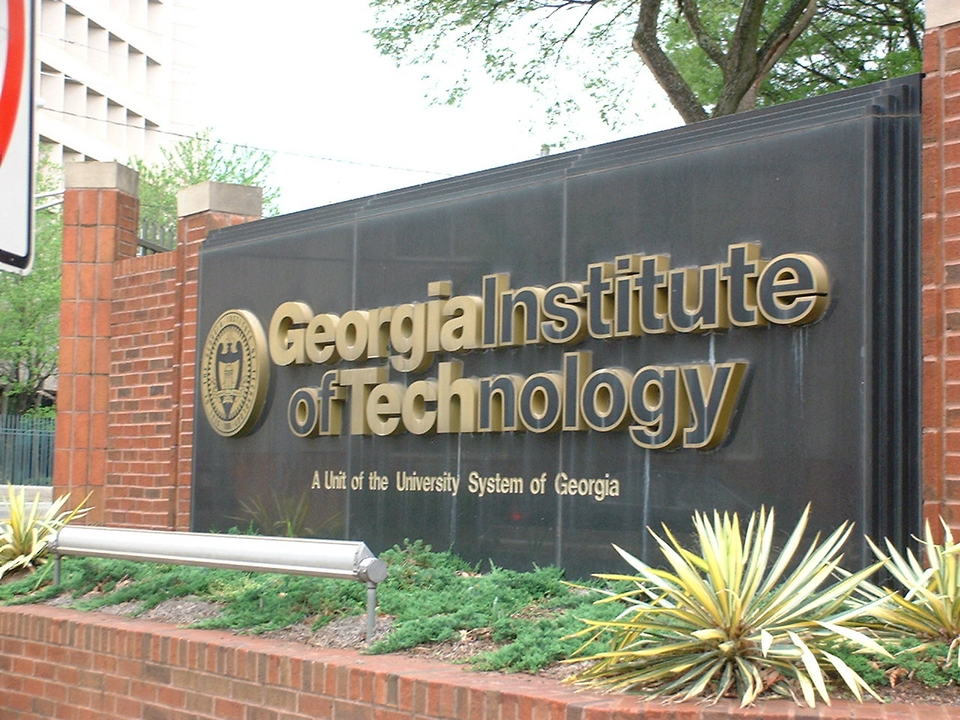
Hosted at Georgia Institute of Technology, the conference was an invigorating opportunity to connect with other professionals who, just like us at CCRI, face similar challenges an ever-changing Higher-Ed landscape.
Building Your Continuous Improvement Resources
During the conference I had the pleasure of participating in a session titled Building Your Continuous Improvement Resources presented by members of the Project Implementation and Support team of Ivy Tech Community College. They presented a scenario via a case study and then led the group through various applicable continuous improvement tools to address the issue including Current State Process Mapping, Root Cause Analysis, Mind Mapping to identify possible solutions, and developing Action Plans.
Case Study
The case study presented a problem statement not unlike challenges we face here at CCRI:
“Despite various institutional efforts to support student success, undecided students (those who enroll without declaring a program or major) are consistently less likely to return after their first term. Data shows that only 52% of undecided students are retained into a second term, compared to 61% of students with a declared major. Many report a lack of direction, minimal contact with advisors or coaches, and unclear next steps. This pattern represents a critical gap in the college’s efforts to guide students toward successful outcomes.”
For the full narrative case story, click here.
Current State Process Mapping
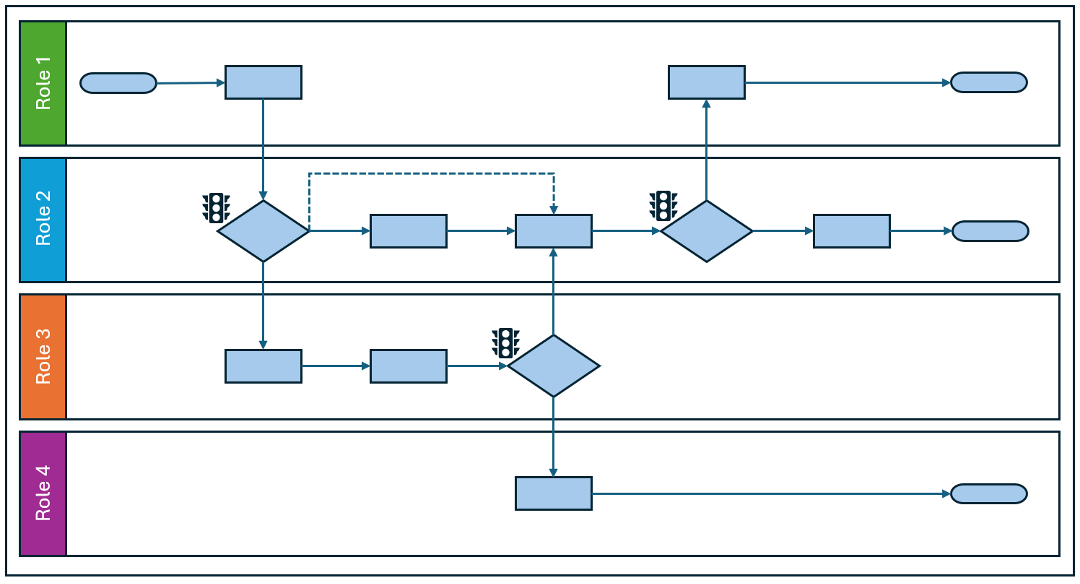
Current state process mapping is a valuable tool in improvement that allows stakeholders to capture an accurate picture of how work is really performed before action is taken to make changes. Some facilitation questions during process mapping include:
- What kicks off the process? What ends it?
- Who is responsible for each step?
- What systems or tools are used and how do they connect or not connect?
- Where do delays happen? Where is follow-up unclear?
- Are there steps that feel unnecessary or repeated?
- Is anyone left out of the loop or pulled in too late?
Using various symbols, participants in the development of a current state process map create a visual depiction of how the process flows and identify where there are embedded inefficiencies or delays that may affect the success of the process and therefore the experience of employees involved and the students the process attempts to serve.
Common Process Mapping Symbols include:
- Ovals – Start or End of process
- Rectangle – Tasks or Action Steps
- Diamonds – Decision Points
- Arrows – Flow or sequence from one step to another
- Dotted lines – Optional step or inconsistent paths
- Participants can identify known issues or delays in various ways (stoplight in example below)
Root Cause Analysis
Root Cause Analysis begins with identifying what the problem is and defining it. In the example from the case study, the problem is defined: 48% of undecided students do not return after enrolling in their first term.
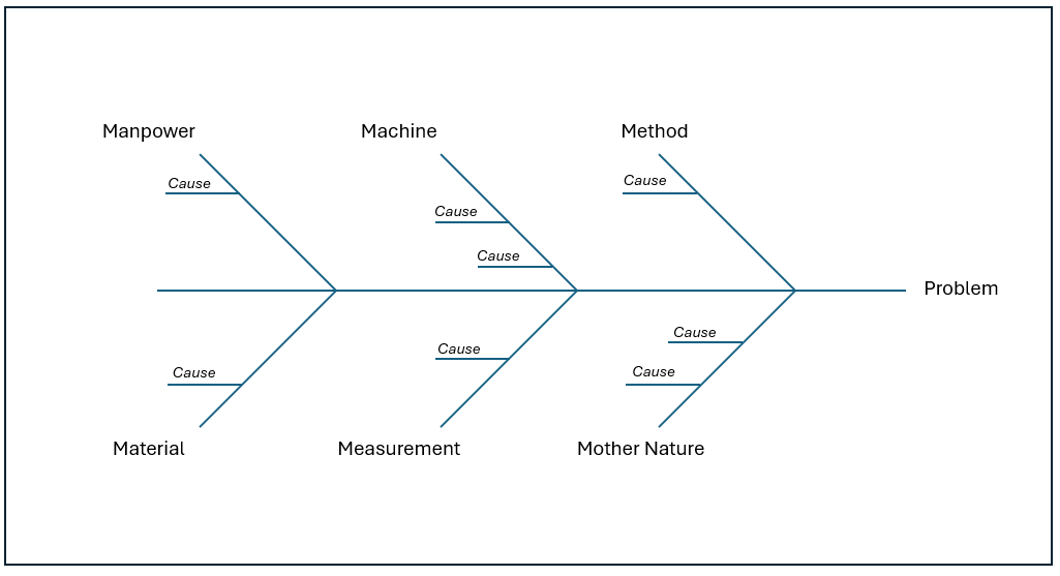
The second step is to apply methods that will support determination of the root cause of the problem. Utilizing an Ishikawa or Fishbone Diagram, participants can apply analysis that will help to identify if the source of the problem is caused by one of “6 M’s”:
Manpower (People)
Skills, training, experience, workload, attitudes, communication.
Example: Inadequate training leads to data entry errors.
Machine
Equipment, tools, technology, and maintenance.
Example: A poorly calibrated printer causes misaligned labels.
Method
Processes, procedures, work instructions, policies.
Example: Outdated Standard Operating Procedures cause confusion about correct steps.
Material
Raw materials, components, supplies, or data inputs.
Example: Using lower-quality materials causes defects in production.
Measurement
Data collection methods, inspection tools, metrics accuracy.
Example: Inconsistent measuring devices lead to faulty readings.
Mother Nature (Environment)
Physical conditions: temperature, humidity, workspace layout, noise, lighting.
Example: Excessive humidity causes product warping.
Identifying Solutions through Mind Mapping
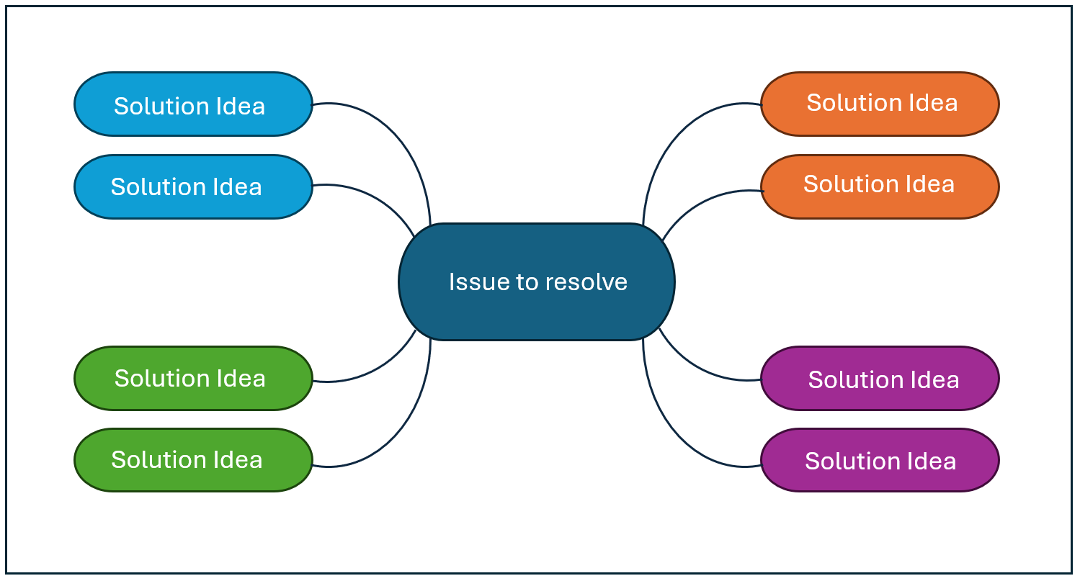
After performing root cause analysis, mind mapping can be a helpful brainstorming tool to generate ideas, explore connections visually, and identify potential solutions. Any issues to resolve are identified and placed in the center of a diagram and then participants identify ideas for solutions radiating from the central node. Participants may organize them by themes or relevant stakeholders using color coordination and/or grouping. Mind Mapping is powerful as it brings many perspectives together to generate several possible ideas that can later be reviewed to develop and implement action plans.
Developing Action Plans
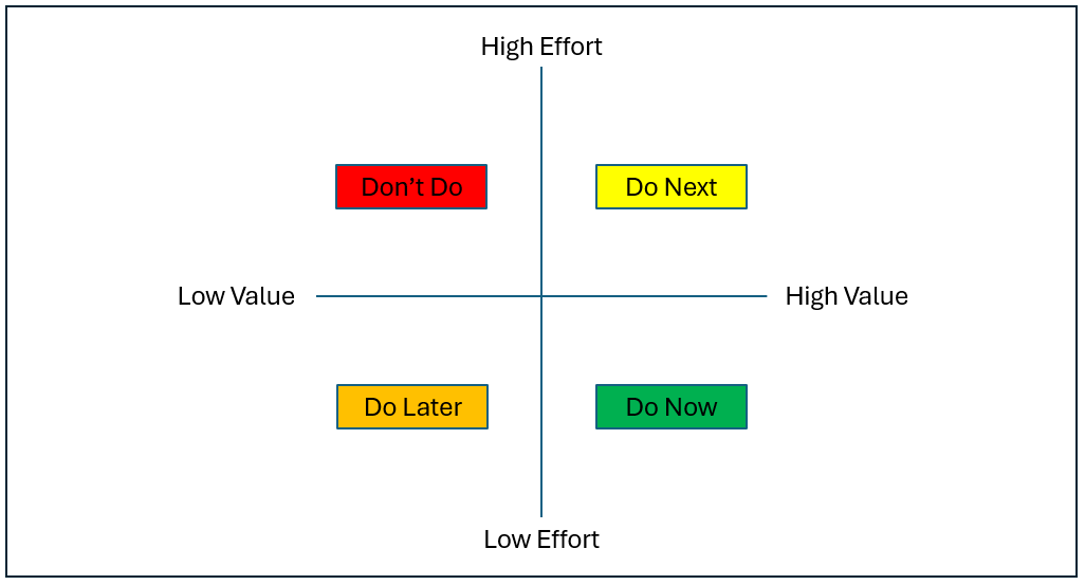
One key to effectively implementing continuous improvement is to not try to take on everything at once. Instead, focus on small, incremental changes as they often yield better long-term results than large, disruptive overhauls. In reviewing current state process maps, the results of root cause analysis and subsequent solution options, it’s important to develop an achievable action plan. A simple way to identify issues to address and how to prioritize solutions is through is use of an Impact-Effort matrix.
Do Now: (High Value, Low Effort)
These items are easy to do and have big payoffs. They should be prioritized immediately.
Do Next: (High Value, High Effort)
These items are worth doing but require significant resources. Projects should be planned carefully.
Do Later: (Low Value, Low Effort)
These items may be considered “nice-to-have” but are not urgent. Do then when you have capacity.
Don’t Do: (Low Value, High Effort)
These items are considered “timewasters” as they produce little benefit for the investment.
Summary
Not unlike other higher education institutions across the country, CCRI faces numerous challenges in meeting the needs of the students we serve. The NCCI conference session on Building Your Continuous Improvement Resources was a valuable opportunity to learn applications that support our efforts to face such challenges and to strengthen institutional effectiveness by eliminating waste and creating sustainable value. Utilizing tools such as the development of current state process maps to identify where inefficiencies and/or delays occur, performing root cause analysis to identify the source of such issues, conducting mind mapping sessions to identify all possible solutions, and developing action plans are all ways to address these challenges strategically and systematically.
CCRI employees who are interested in discussing how such tools may be useful in supporting their teams in navigating change and improvement can reach out to me at anytime. We in the division of Institutional Equity, Human Resources and Organizational Development can also facilitate such sessions.
Have something to share?
Submit a StoryHave a story about a student, colleague, or yourself?! Share your story with CCRI and engage with the community.