The Communication and Media associate degree program offers students a choice of concentrations
that prepares students to enter a career in various communication and media disciplines
or to transfer to a four-year college where they can further refine and develop their
skills, earning a bachelor’s degree. Transfer agreements with local and regional colleges
enable students to make a seamless transition into a four-year institution. Program
faculty mentor students to help them select, balance, and sequence courses.
Whether creating content for traditional or digital media platforms, enrolled students
will acquire the skills to craft and communicate a message. A combination of core
course requirements, as well as specialized courses and general electives, provides
students with theoretical background and hands-on application. Field placement, a
portfolio, and experiential learning are built into the program so graduates are prepared
to enter careers with work experience.
In the Film concentration, students learn to imagine, plan, and produce stories and
messages for all media. Students will create narrative fiction, documentary, experimental,
and animated films, submitting their work to film festivals and learning practices for distribution through streaming platforms and traditional cinema.
The ubiquity of social media platforms and the prevalence of content like short-form
videos, motion graphics, and podcasts have increased demand for makers who know how
to tell a story to any audience – and with a variety of tools. Students will receive
robust training in image and sound production, animation, screenwriting, editing,
digital literacy, media, and film history. Students will learn to operate state-of-the-art
video, audio, and lighting equipment, along with software and tools. From short films
to podcasts and branded content for social media, students will learn to produce stories
that engage, inform, and entertain.
Program Learning Outcomes
Upon completion of this program, a student will be able to:
- Communicate effectively, both spoken and written, in a variety of contexts and across
a variety of platforms
- Produce media that informs, persuades, or inspires an audience.
- Create evidence-based research, orally or in written form, with visuals.
- Participate in a work-based learning experience, and internship, and produce a media
portfolio.
- Create visual stories utilizing image composition, sequencing, nonlinear editing techniques,
and the three phases of production.
- Demonstrate competency in operating media production equipment and software in the
studio and field.
- Discuss the history and forms of media production, its use, and its impact on society,
corporations, and government, from local and global perspectives.
Requirements
Course List
| Code |
Title |
Hours |
| COMM 1010 |
Communication Fundamentals^ HUMN; Non-Written Communication; Social and Professional Responsibilities |
3 |
| COMM 1075 |
Digital, Civic, and Media Literacy HUMN; Critical Thinking; Diverse Perspectives |
3 |
| ECON 2040 |
Principles of Macroeconomics SSCI; Critical Thinking; Quantitative Literacy |
3 |
| ENGL 1010 |
Composition I (or ENGL 1010A) HUMN; Written Communication; Information Literacy |
3 |
| JOUR 1050 |
Introduction to Mass Media HUMN; Written Communication; Critical Thinking |
3 |
| MATH 1175 |
Statistics for the Health and Social Sciences MSCI; Scientific Reasoning; Quantitative Literacy |
3 |
| MSCI |
3-5 |
|
|
|
|
|
|
| SOCS 1010 |
General Sociology SSCI; Information Literacy; Diverse Perspectives |
3 |
|
24-26 |
| COMM 1005 |
Careers and Academic Success for Communication and Media |
3 |
| COMM 1300 |
Media Production and Presentation |
3 |
| COMM 2490 |
Field Experience^ (last semester course) |
2 |
| COMM 2500 |
Portfolio Capstone (last semester course) |
2 |
| FILM 1010 |
Principles of Film and Media HUMN; Critical Thinking; Diverse Perspectives |
3 |
| FILM 2100 |
Television Production^ |
3 |
| or COMM 1201 |
Radio Production^ |
| or JOUR 1200 |
Newspaper Production^ |
|
16 |
| FILM 1020 |
Film and Media Production |
3 |
| FILM 1204 |
History of Film I: Early Cinema to 1950s HUMN; Critical Thinking; Diverse Perspectives |
3 |
| FILM 2110 |
Crafting the Short Film |
3 |
| FILM 2150 |
Introduction to Cinematography |
3 |
| or FILM 2200 |
Documentary Production |
| FILM 2300 |
Intermediate Editing |
3 |
| FILM 2310 |
Sound Design and Production |
3 |
| FILM 2370 |
Digital Content Creation |
3 |
| or FILM 2350 |
Animation and Motion Graphics |
|
3 |
|
24 |
| Total Hours |
64-66 |
Transfer
Please meet with an Academic Advisor/Student Success Coach if you are interested in earning a bachelor's degree. Your Academic Advisor will
help you select the courses that best prepare you for transfer to a four-year college
or university.
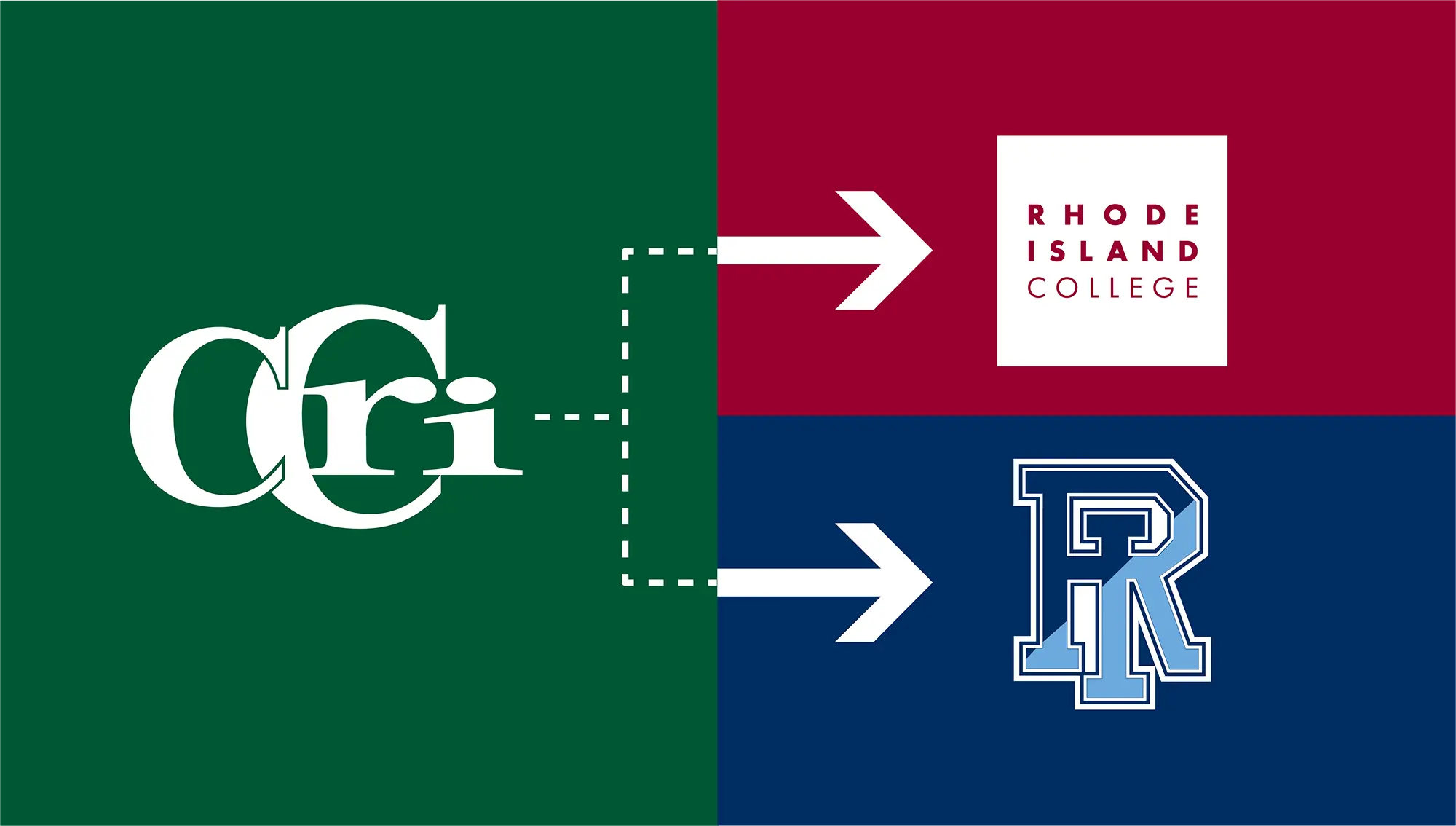
Check out the Joint Admissions Agreement if you are interested in transferring to Rhode Island College or the University of
Rhode Island. The JAA program offers seamless transfer to RIC or URI with additional
benefits. Transfer information, events, and articulations are available on the Transfer Center website.
Students are encouraged to take advantage of Communication and Media transfer opportunities.