CCRI Welcomes International Delegation to Westerly Education Center for Maritime Workforce Showcase
12/10/2025
The Community College of Rhode Island (CCRI) recently hosted a delegation of emerging leaders from Japan and the Republic of Korea at the Westerly Education Center (WEC) as part of the U.S. Department of State’s prestigious International Visitor Leadership Program (IVLP). The visit highlighted CCRI’s nationally recognized role in maritime workforce development and its designation as a Center of Excellence for Domestic Maritime Workforce Training and Education.
The IVLP project, “Trilateral Maritime Workforce Development,” focuses on strengthening U.S.–Japan–Republic of Korea cooperation in maritime security and workforce readiness. Delegates represented leading organizations in shipbuilding, maritime policy, and research, including Japan Marine United, Nippon Yusen Kabushiki Kaisha, JAMSTEC, KOSHIPA, and the Korea Maritime Institute. Their visit to Rhode Island showcased how CCRI’s innovative training model can serve as a blueprint for global workforce development.
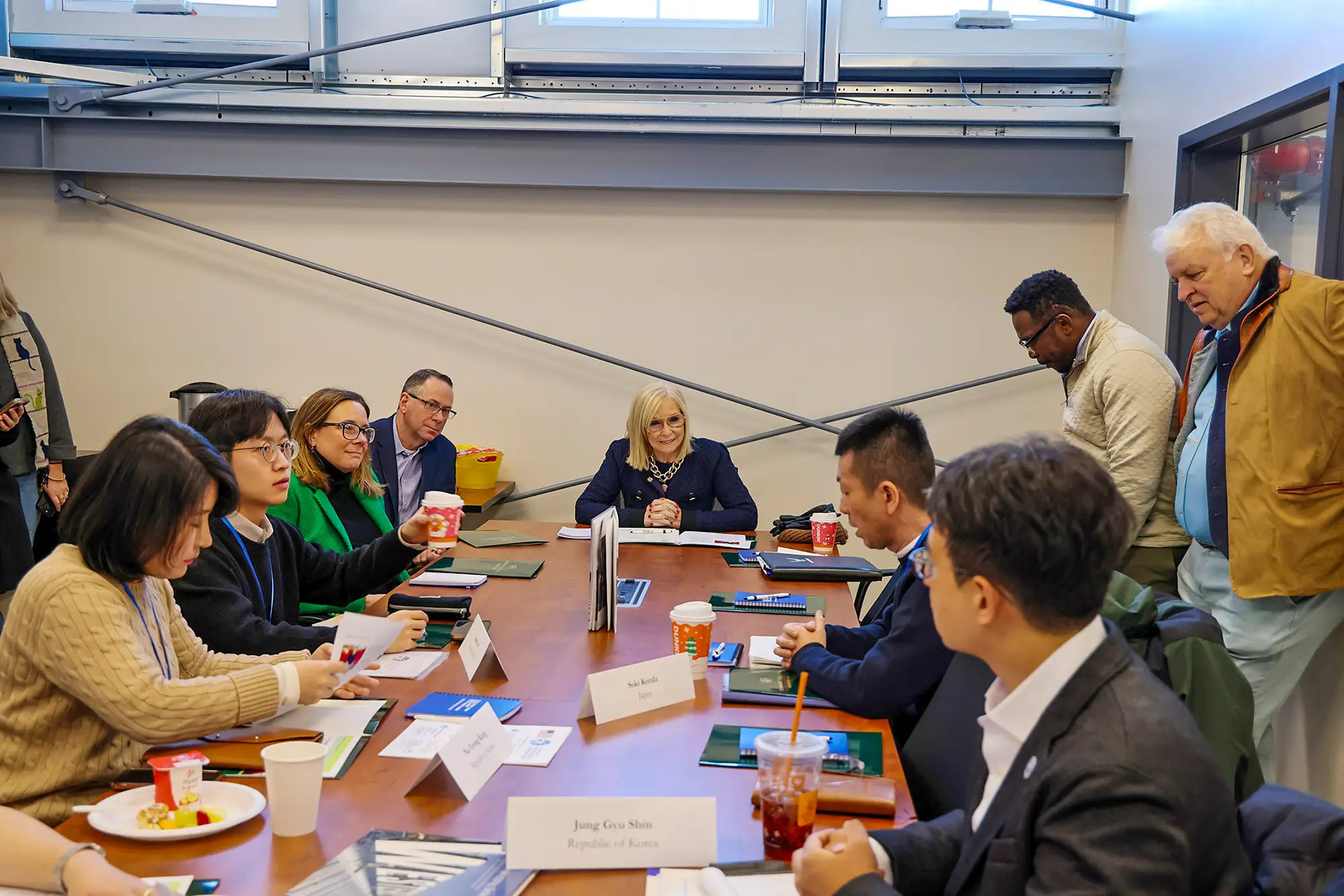
The visit began with welcoming remarks from CCRI President Rosemary Costigan, who shared the college’s commitment to building innovative, employer-driven training programs that create pathways to high-demand careers. President Costigan emphasized CCRI’s unique partnership with General Dynamics Electric Boat (GDEB) and how this collaboration has transformed workforce development in Rhode Island.
Rhode Island Commissioner of Postsecondary Education Shannon Gilkey followed with remarks on the state’s vision for postsecondary education as a driver of economic growth and opportunity. He highlighted how CCRI and WEC exemplify that vision by aligning education with industry needs and creating a robust talent pipeline for the maritime sector.
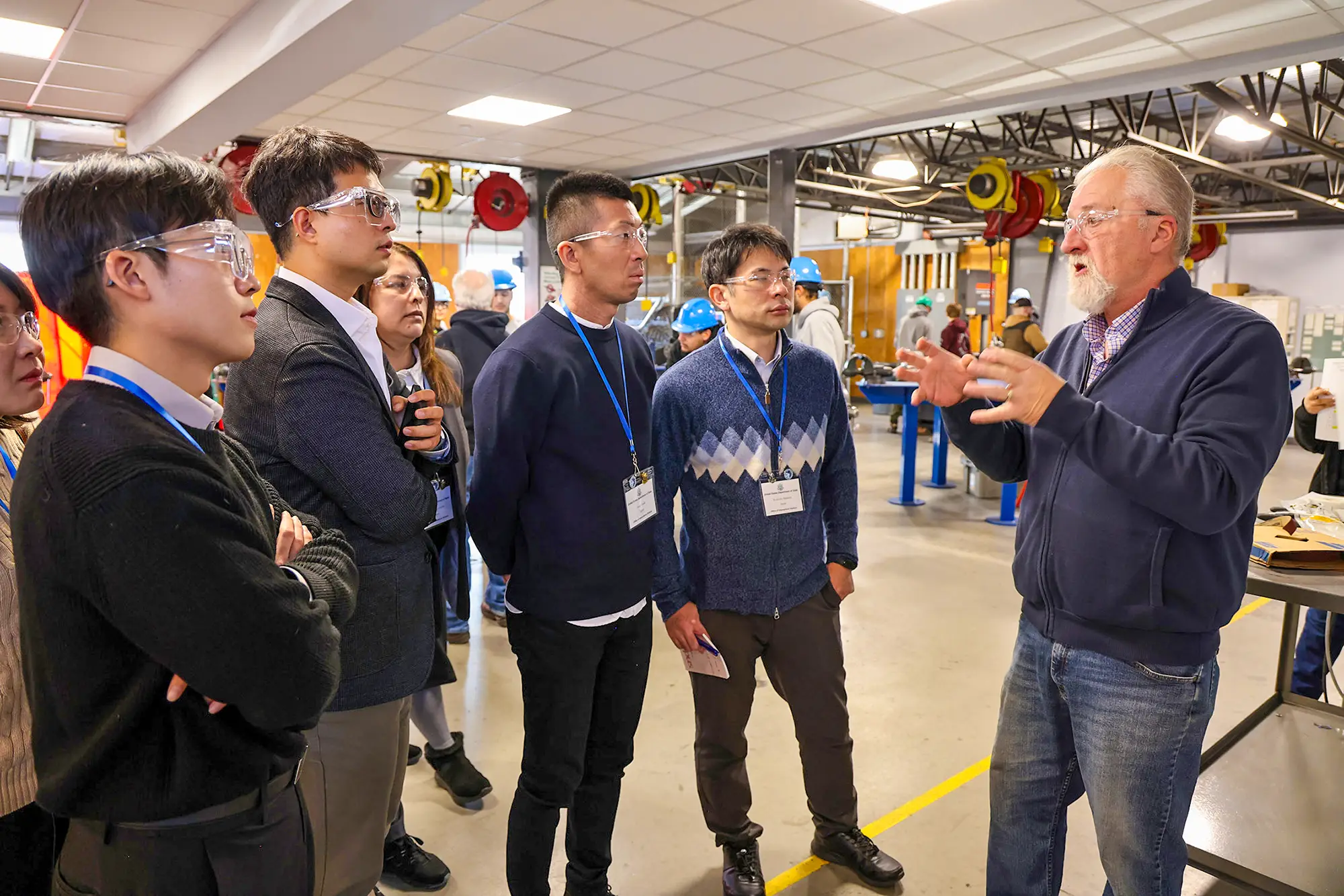
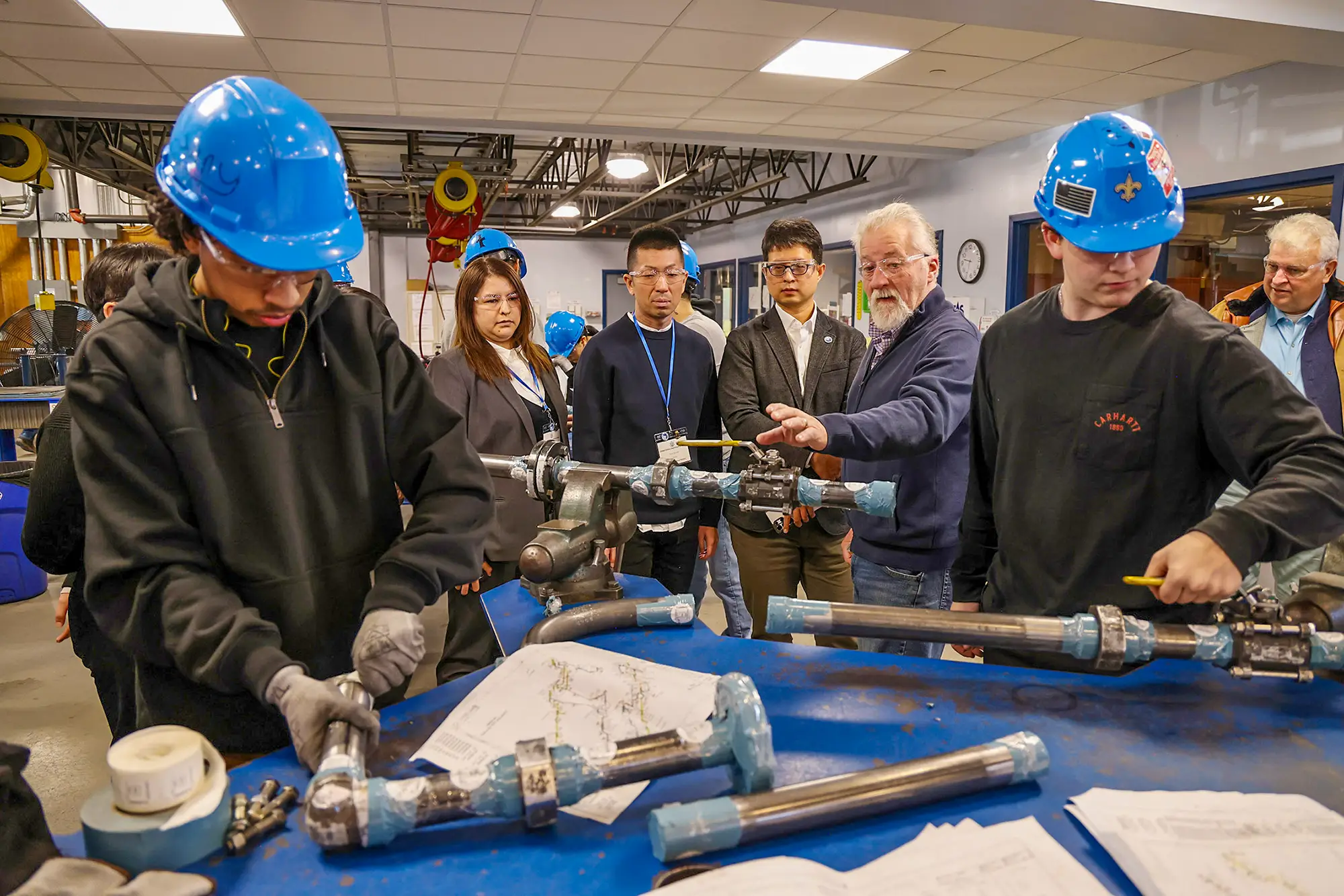
The centerpiece of the visit was a guided tour of WEC’s production floor led by Paul Cournoyer, CCRI Maritime Trades Program Coordinator, and Tom Pearce, WEC Director. Delegates saw firsthand how CCRI trains students for careers in maritime shipbuilding through programs designed in direct partnership with Electric Boat. The training floor replicates real shipyard conditions—down to the tools, fixtures, and safety protocols—so students experience the same environment they will encounter at Electric Boat. This immersive approach ensures graduates are job-ready from day one.
CCRI’s maritime programs are unique in the nation. Developed collaboratively with Electric Boat, the curriculum translates detailed job-task analyses and production specifications into structured learning modules and hands-on practice sequences. Every element - from blueprint reading to pipefitting and electrical systems - is aligned with GDEB standards. This employer-driven model has trained more than 5,300 Rhode Islanders since 2017 and was a key factor in CCRI earning its federal designation as a Center of Excellence. That recognition underscores CCRI’s leadership in preparing a skilled workforce critical to national security and economic resilience.
Have something to share?
Submit a StoryHave a story about a student, colleague, or yourself?! Share your story with CCRI and engage with the community.