Phlebotomy - Certificate
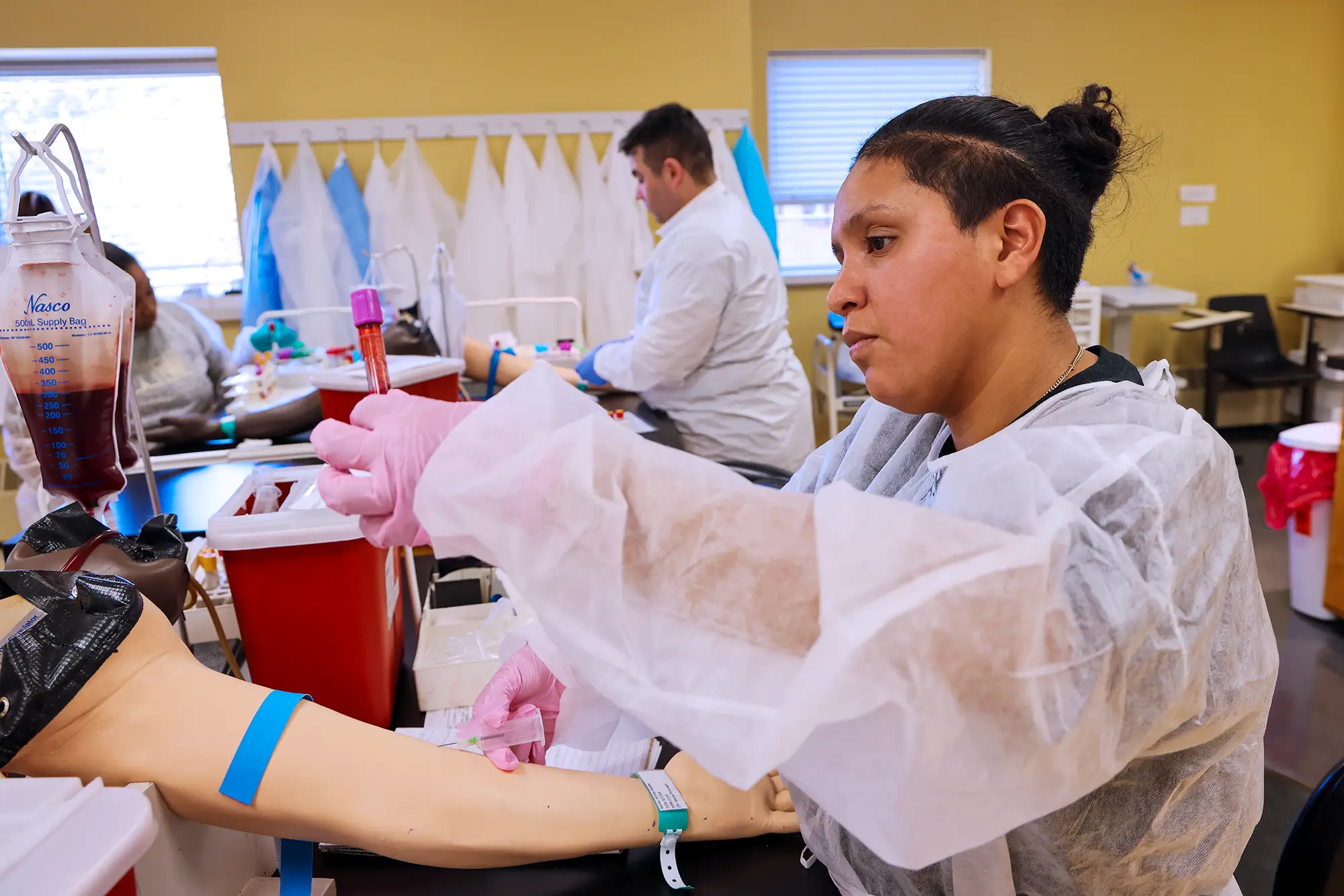
Phlebotomists are essential members of the healthcare delivery team who primarily are responsible for collecting blood specimens from patients for laboratory testing. The phlebotomist plays a vital role by obtaining quality specimens that enable the laboratory to deliver meaningful and accurate test results to assist the physician in diagnosis.
The Phlebotomy certificate program is a part-time, two-semester program, offering three classes per year. The program includes lectures and laboratory experiences at CCRI as well as practical training at a clinical site. Instruction is designed to provide both the technical and interpersonal skills required for the competent and professional practice of phlebotomy.
Upon successful completion of this program, graduates are eligible to sit for a national certification examination for phlebotomy given by recognized agencies. Qualified phlebotomists may be employed in hospital laboratories, private laboratories, doctors’ offices, clinics, emergency rooms or blood donor centers.
Phlebotomy students are eligible for financial aid and the Dean’s List.
Technical standards: The physical activity level (strength) level for phlebotomist (079. 36.022) is classified as “light” by the Department of Labor Dictionary of Occupational Titles.
Note: Many courses require prerequisites, corequisites and/or testing. See course descriptions at the back of the catalog for details.
General Policies
See important general policies in the beginning of this section on the performance-based Health Sciences application process, academic progress, advanced placement, background check, CPR certification, health insurance, health records, reinstatement, transportation, uniforms, and equipment.
Minimum Requirements to Apply to the Phlebotomy Certificate Program
- CCRI application – Complete and submit a CCRI Application for Enrollment. General Studies should be the first choice; PHLE should be the second choice.
- High school transcript – An official copy of a high school or GED® transcript, including date of graduation, must be provided. If the applicant holds a baccalaureate degree from an accredited college or university, the high school transcript may be waived; a college transcript must indicate completion and degree awarded.
- CCRI uses a multiple measures approach to determine admission into Health Science programs (For example: High School
and GED® transcripts, SAT, ACT, HESI A2 or ACCUPLACER scores). Placement can also
be determined by taking college level English and Math courses. Anyone with a degree
from an institutionally accredited higher education institution may have this requirement waived following
submission of the official college transcript. If using ACCUPLACER, the following guidelines are used:
- Placement testing – Complete a standardized test (ACCUPLACER) issued by CCRI’s Advising Center. Students may NOT retake the ACCUPLACER test before completing the remedial course/courses. Note: For application purposes, ACCUPLACER testing can be waived for students who provide documentation of a bachelor’s degree or higher. Students are advised that individual departments may still require ACCUPLACER testing as a prerequisite for their courses.
- Reading comprehension test must show competency of 80 or above in Classic ACCUPLACER or a score of 253 or above in Next-Generation ACCUPLACER or students must complete Reading and Study Skills Program (ENGL 1002) with a grade of B- or better. Composition I for Speakers of English as a Second Language (ESL) (ENGL 1300) will not substitute for Composition I (ENGL 1010).
- Health Sciences application – Complete and submit a performance-based Health Sciences application including a
preadmission degree evaluation during the open enrollment period.
- Important: Submission of a performance-based Health Sciences application does not guarantee acceptance to the program. Acceptance is based on points earned as listed in the program acceptance criteria point system. (See Dean of Health and Rehabilitative Sciences webpage.) At the time of admission, students must meet the current admission requirements. Students declining acceptance into the program for the semester offered must resubmit a performance-based Health Sciences application and meet the current admission requirements.
- Background check – Students are required to submit a background check when directed by notification from One Stop Student Services.
Program Requirements
- Maintain at least a grade of C in PHLE I and II.
- Program faculty reserve the right to require withdrawal of any student from the program or to refuse reinstatement based on the student’s academic, clinical or professional performance.
- Composition I for Speakers of English as a Second Language (ESL) (ENGL 1300) may not be substituted for Composition I (ENGL 1010).
Program Learning Outcomes
Upon completion of this program, a student will be able to:
- Practice accepted standards for infection control and safety as mandated by OSHA and CLSI.
- Apply understanding of the importance of specimen collection and specimen integrity in the delivery of patient care.
- Perform venipunctures proficiently following CLSI standards.
- Perform capillary puncture following CLSI standards.
- Perform EKG proficiently.
- Perform specimen transport and processing according to CLSI standards.
- Apply appropriate quality assurance and quality control to waived laboratory testing according to CLIA regulations.
- Follow manufacturer's directions for CLIA waived tests.
- Communicate and interact appropriately with patients, staff and coworkers.
- Use computers in the workplace.
- Discuss policies and protocol designed to maintain confidentiality and to avoid medico-legal problems.
- Apply ICD-CM codes to clinical laboratory testing.
Certificate Requirements
| Code | Title | Hours |
|---|---|---|
| ENGL 1010 | Composition I (or ENGL 1010A) | 3 |
| MEDL 2385 | International Classification of Diseases – Clinical Modification ICD-CM | 1 |
| MLTC 1170 | Quality Assurance for Point of Care Laboratory Testing | 1 |
| MLTC 1960 | Clinical Laboratory Information Systems | 1 |
| PHLE 1010 | Phlebotomy I | 6 |
| PHLE 1020 | Phlebotomy II 1 | 6 |
| RESP 2140 | Basics of Electrocardiography | 1 |
| Subtotal | 19 | |
| Total Hours | 19 | |
- 1
-
Students must be available to train weekdays (eight hours per day, five days per week) for three consecutive weeks.
Recommended Course Sequence
| Year 1 | ||
|---|---|---|
| Semester 1 | Hours | |
| ENGL 1010 | Composition I (or ENGL 1010A) | 3 |
| PHLE 1010 | Phlebotomy I | 6 |
| MLTC 1960 | Clinical Laboratory Information Systems | 1 |
| MEDL 2385 | International Classification of Diseases – Clinical Modification ICD-CM | 1 |
| Hours | 11 | |
| Semester 2 | ||
| PHLE 1020 | Phlebotomy II 1 | 6 |
| MLTC 1170 | Quality Assurance for Point of Care Laboratory Testing | 1 |
| RESP 2140 | Basics of Electrocardiography | 1 |
| Hours | 8 | |
| Total Hours | 19 | |
- 1
-
Students must be available to train weekdays (eight hours per day, five days per week) for three consecutive weeks.
More Information
In order to perform the tasks of a phlebotomist, certain capabilities are required. These capabilities are associated with the successful practice of phlebotomy.
Physical Requirements:
- The position of Phlebotomist has been given a strength ratio of LIGHT WORK by the U.S. Dictionary of Occupational Titles (exerting up to 20 pounds of force occasionally, and/or up to 10 pounds of force frequently, and/or a negligible amount of force 2/3 or more of the time to move objects).
- The student must be able to walk, stand and sit for periods of time, as well as stoop, bend, lift and carry.
- The student must have manual dexterity, good motor skills, and eye-hand coordination.
- The student must possess visual acuity, sufficient to allow for differentiation of colors, reading preprinted labels and requisitions, and identifying patients.
- The student must possess verbal and nonverbal skills adequate for transmitting and receiving information from patients and hospital personnel.
- The student must read, write, speak and comprehend English with sufficient skill to communicate.
- The student must be aware at all times of tasks being performed, and alert to the well-being of the patient.
- The student must exhibit behavioral and social skills that are acceptable to the college and clinical setting.
- The student must be able to follow verbal and written instruction.
- What is a phlebotomist?
- Where do phlebotomists work?
- What is the average salary?
- What type of training is required?
- What are the necessary high school courses?
- What does the education program in Phlebotomy consist of?
- What are the admission requirements?
- If I apply, what are the chances of getting accepted?
- What is the typical cost of this program?
- Whom may I contact for more information?
Q: What is a phlebotomist?
A: A phlebotomist is an important member of the healthcare team. Phlebotomists obtain blood specimens by venipuncture and skin puncture. Phlebotomists work closely with patients and other healthcare professionals. Phlebotomists are trained to perform ECGs, point of care testing, medical coding, computer information tasks, and specimen processing.
Q: Where do phlebotomists work?
A: The phlebotomist can be employed in private laboratories, doctors' office laboratories, hospital labs, clinics, emergency rooms, and donor collection centers.
Q: What is the average salary?
A: According to the United States Department of Labor and Statistics, the median salary for phlebotomists is $30,670 per year, or $14.75 per hour. Positions are available on all shifts. (http://www.bls.gov/ooh/healthcare/phlebotomists.htm)
Q: What type of training is required?
A: A two-semester program which includes 160 hours of clinical training at an affiliated site (hospital, private lab or clinic). After successfully completing this training, a student will be eligible to take a national certification exam in phlebotomy. The training program at CCRI is an integrated program that combines theory with technical skills development under the direction of the program director. The student will receive a Phlebotomy Certificate from CCRI.
Q: What are the necessary high school courses?
A: Any high school student interested in this program could take an elementary algebra, basic science (including biology and chemistry - these courses are optional). The student should also have good reading, writing and communication skills.
Q: What does the education program in Phlebotomy consist of?
A: The Phlebotomy Program is a two-semester, part-time program. First semester courses include Phlebotomy I, an English course (ENGL 1010), Introduction to Laboratory Information Systems, and ICD-CM Medical Insurance Coding. Second semester courses include Phlebotomy II, Basics of Electrocardiography, and Quality Assurance for Point of Care Testing. These courses teach the necessary skills and theory needed to function as a competent phlebotomist. The student must have a 2.0 cumulative average to graduate from the college. This program contains a total of 160 hours of clinical training at a hospital or private lab. Students enrolled in either the day or evening program must be available to train at a clinical site during the day.
Q: What are the admission requirements?
- CCRI application
- High school transcript or GED
- Placement testing
- Reading comprehension test
- Health sciences application
- Good communication skills
Q: If I apply, what are the chances of getting accepted?
A: CCRI accepts approximately 28 day students and 14 evening students into the Phlebotomy Program each year. The program is offered at the Liston (Providence) Campus only. Prior to final acceptance, candidates will be directed by One Stop Student Services to complete a criminal background check.
Q: What is the typical cost of this program?
A: The typical cost of the program for a full-time student is the current CCRI tuition and fees, laboratory fees, books, uniforms and travel expenses to the clinical sites. Additional information can be found on the Bursar website at www.ccri.edu/bursar.
Q: Whom may I contact for more information?
A: Contact Walé Fayanjuola, One Stop Student Services, at the Providence Campus. The address is:
Walé Fayanjuola
Community College of Rhode Island
Liston Campus
1 Hilton St.
Providence RI 02905
(401) 455-6104
[email protected]
CCRI Website: www.ccri.edu
If more specific information is needed, contact Debra St. Pierre, Phlebotomy Program Director, at (401) 333-7106, or email [email protected].
Where Opportunity Meets Affordability
Why Choose CCRI?
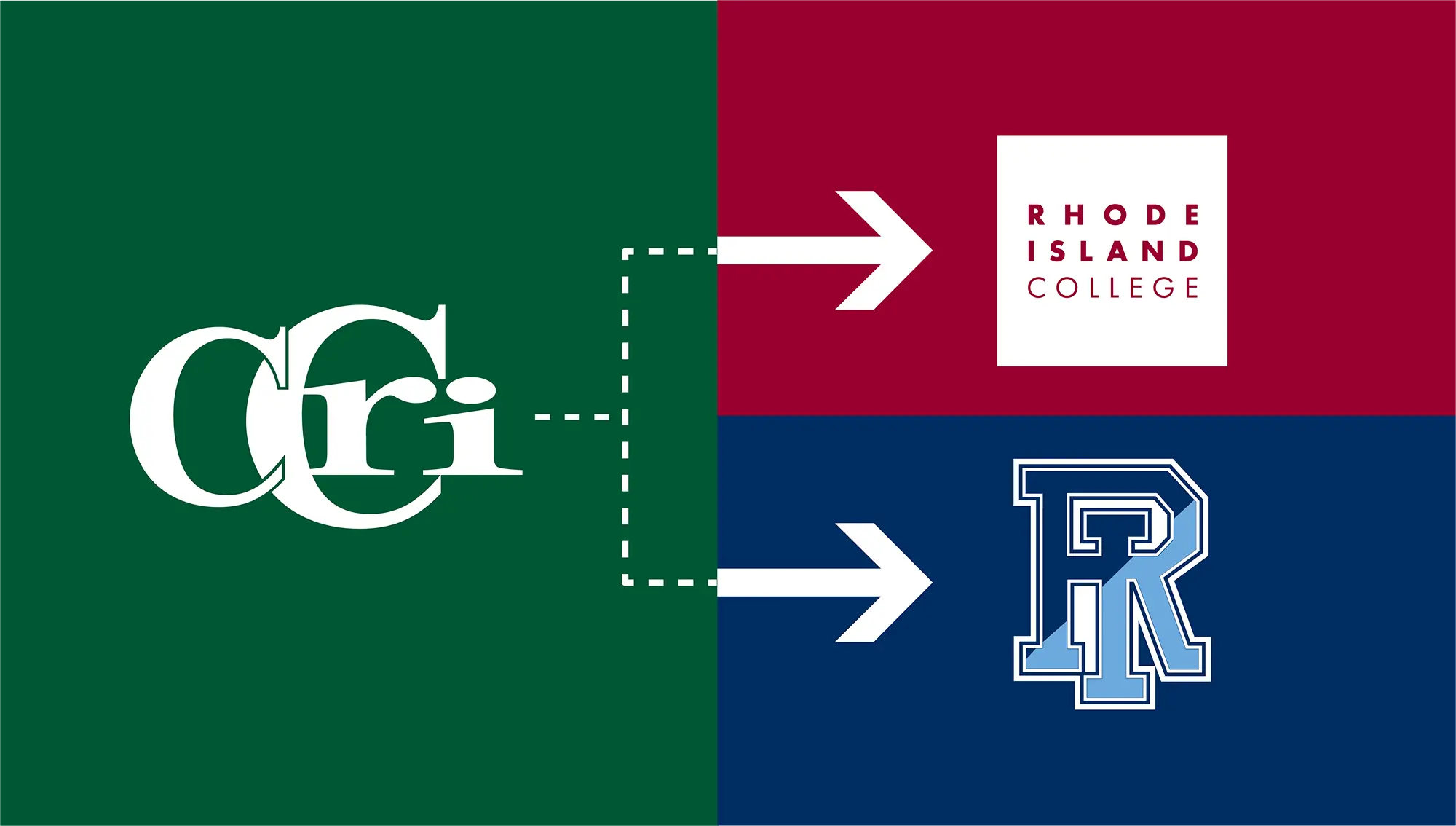
CCRI, one of New England's most affordable colleges, is now completely free for Rhode Island students heading straight from high school thanks to the Rhode Island Promise Scholarship. For those pursuing a bachelor's degree, starting at CCRI can also lead to up to 30% discounted tuition at Rhode Island College or the University of Rhode Island upon transferring.

Our Services
We Are Here for You!
CCRI puts your success at the center of all we do. Staff from our Advising and Counseling, The Tutoring Center, Career Services, Benefits Hub, Financial Aid, Veteran Services, and the entire Division of Student Services is here every step of the way to help you reach your academic and career goals.
At One Stop we assist prospective, current, and former students, with a variety of processes including applying to college, checking financial aid status, turning in required documents, registering for classes, paying your bill, and more!
The Advising Center offers a full range of services for CCRI students. These services include academic advising, career, educational and personal counseling services.
CCRI's Tutoring Center provides free in-person and online tutoring and academic coaching to help you achieve success.
Career Services collaborates with and prepares our diverse student population to make well-informed career decisions through professional readiness, exploration, and work-based learning opportunities.
The Benefits Hub offers students basic needs assistance grounded in respect, trust, and equity.
CCRI offers financial assistance to students who might otherwise be unable to further their education without such support. The Financial Aid Department is here to guide you through the process.
The CCRI Veteran Services Office is committed to being a resource to all VA education beneficiaries.
Where Campus Life Comes to Life!
Beyond the Classroom
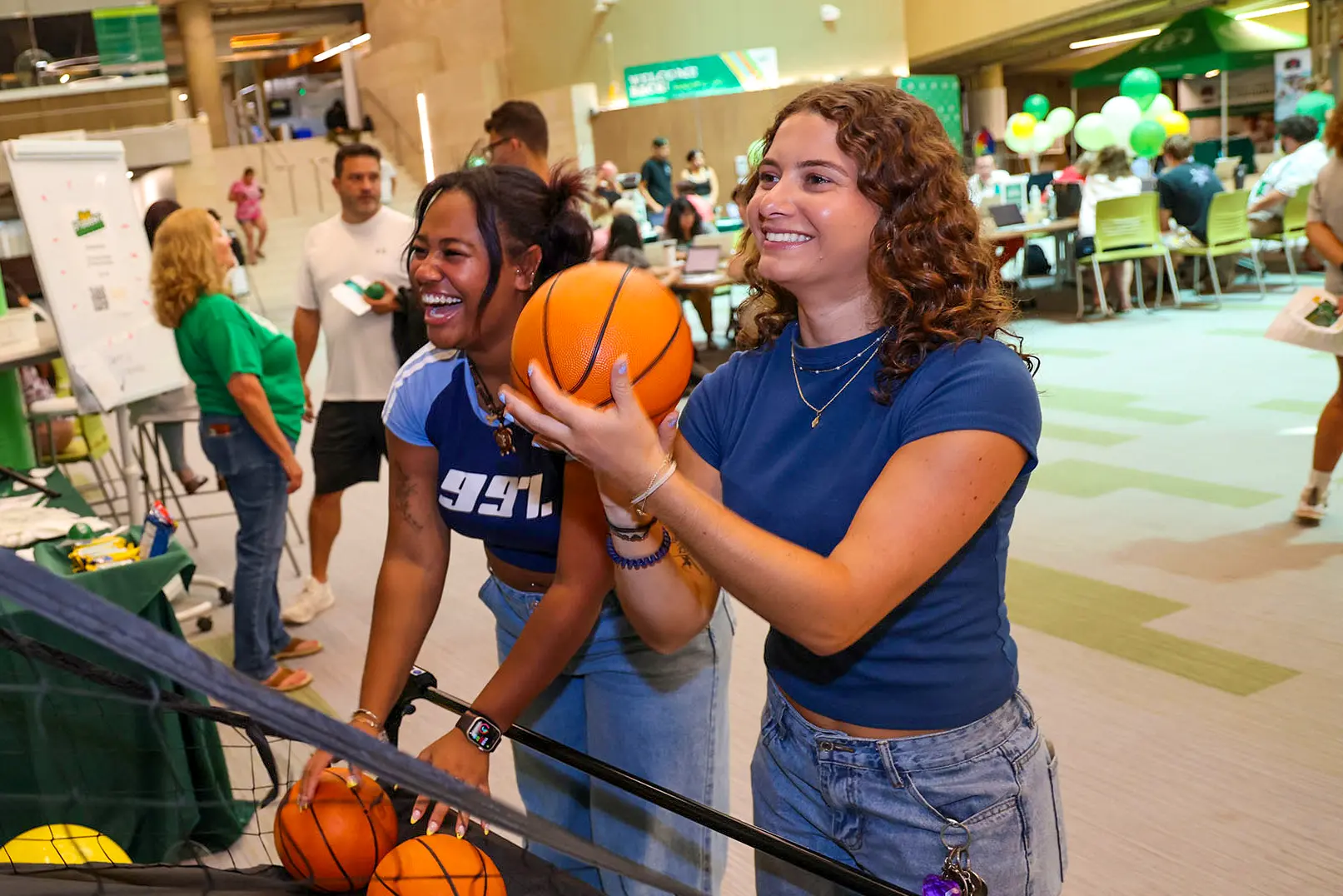
CCRI offers a vibrant campus life with a variety of events, athletic programs, and student clubs to keep you engaged and connected throughout your college experience.
Related Resources
Welcome to CCRI
Apply for Free Today!We're excited about your interest in attending the Community College of Rhode Island! Whether you're looking to discover your career path, start or complete your college degree, or take classes to enrich your life, we look forward to having you join our community!