Histotechnician - Associate in Applied Science
Occupational Title: Histotechnician
This program may be completed fully online or at the Liston (Providence) Campus.
This program is accredited by the National Accrediting Agency for Clinical Laboratory Sciences (NAACLS), 5600 N. River Road., Suite 720, Rosemont, IL, 60018, 773-714-8880, [email protected].
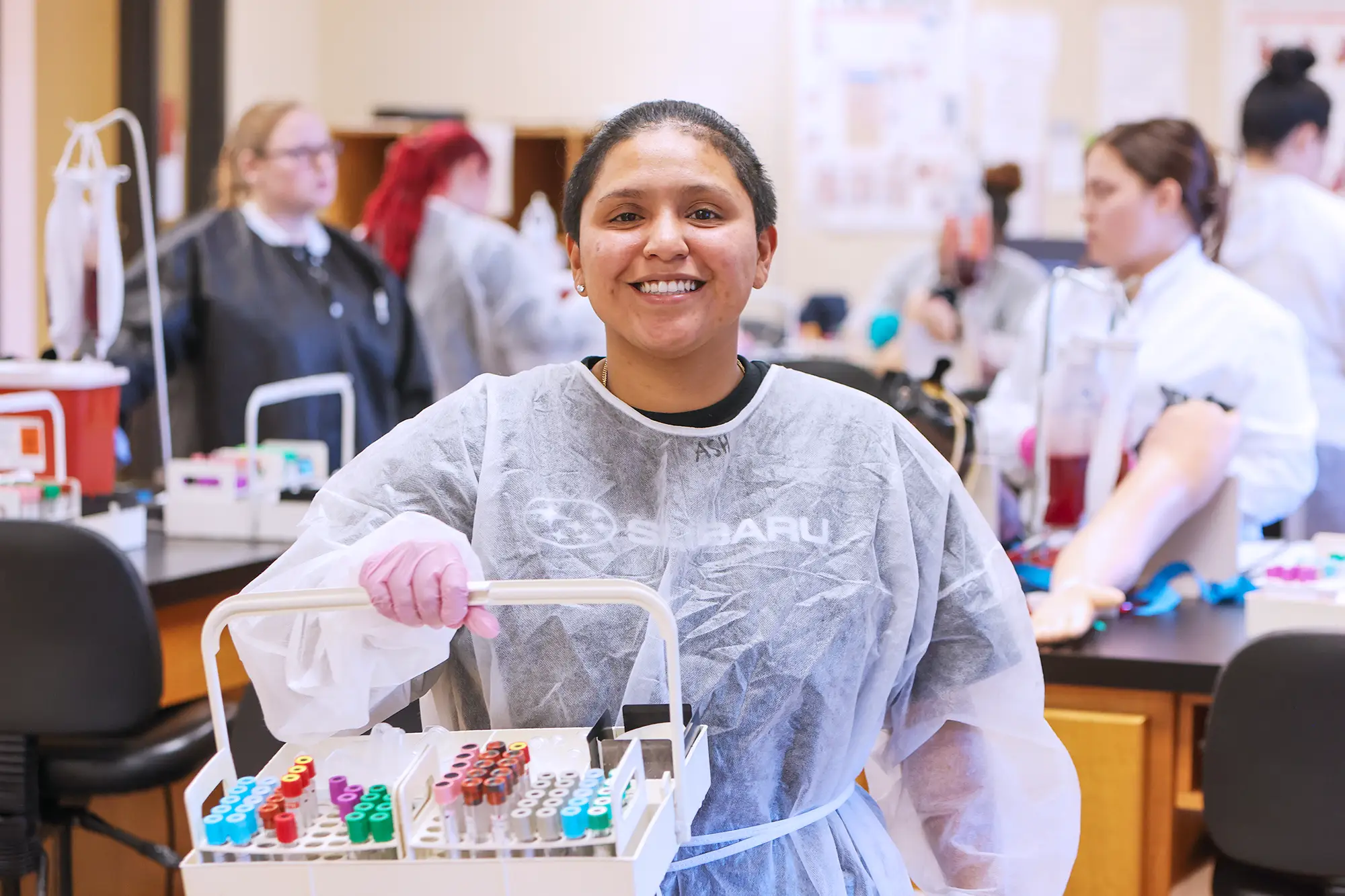
Histotechnicians are integral members of the healthcare team. It is the job of the histotechnician to prepare sections of human tissue from biopsy or autopsy for microscopic examination by processing and cutting tissues, mounting them on slides and staining them with special dyes for microscopic examination by a pathologist for the diagnosis of disease. Most histotechnicians work in hospital laboratories, medical research laboratories, veterinary pathology and forensic laboratories.
The CCRI Histotechnician program prepares students to enter this challenging and rewarding field and provides them with entry-level knowledge, application and problem-solving skills needed to function as active members of the healthcare team. Graduates of the program are eligible for:
- Employment in a hospital, crime lab, veterinary lab and public health facility.
- Transfer to a bachelor’s degree program.
- Sitting for the national certification examination for HT given by ASCP Board of Certification (BOC).
Technical standards: The physical activity level for Histotechnician (078.261.030) is classified as “light” by the Department of Labor in the Dictionary of Occupational Titles.
Note: Many courses require prerequisites, corequisites and/or testing. See course descriptions at the back of the catalog for details.
General Policies
See important general policies in the beginning of this section on the performance-based Health Sciences application process, academic progress, advanced placement, background check, CPR certification, health insurance, health records, reinstatement, transportation, uniforms, and equipment.
Minimum Requirements to Apply to the Histotechnician Program
- CCRI application – Complete and submit a CCRI Application for Enrollment. General Studies should be the first choice; pre-Histotechnician (HSTO) should be the second choice.
- High school transcript – An official copy of a high school or GED® transcript, including date of graduation, must be provided. If the applicant holds a baccalaureate degree from an accredited college or university, the high school transcript may be waived; a college transcript must indicate completion and degree awarded.
- CCRI uses a multiple measures approach to determine admission into Health Science programs (For example: High School
and GED® transcripts, SAT, ACT, HESI A2 or ACCUPLACER scores). Placement can also
be determined by taking college level English and Math courses. Anyone with a degree
from an institutionally accredited higher education institution may have this requirement
waived following submission of the official college transcript. If using ACCUPLACER, the following guidelines are used:
- Placement testing – Complete a standardized test (ACCUPLACER) issued by CCRI’s Advising Center. Students may NOT retake the ACCUPLACER test before completing the remedial course/courses. Note: For application purposes, ACCUPLACER testing can be waived for students who provide documentation of a bachelor’s degree or higher. Students are advised that individual departments may still require ACCUPLACER testing as a prerequisite for their courses.
- Reading comprehension test must show competency of 90 or above in the Classic ACCUPLACER or a score of 259 or above in the Next Generation ACCUPLACER or students must complete Reading and Study Skills Program (ENGL 1002) with a grade of B- or better. Composition I for Speakers of English as a Second Language (ESL) (ENGL 1300) will not substitute for Composition I (ENGL 1010).
- Complete courses required for admission with a grade of C or better:
- GPA – A cumulative grade point average of 2.0 or better for all college courses taken.
- Health Sciences application – Complete and submit a performance-based Health Sciences application including a
preadmission degree evaluation during the open enrollment period.
- Important: Submission of a performance-based Health Sciences application does not guarantee acceptance to the program. Acceptance is based on points earned as listed in the program acceptance criteria point system. (See Dean of Health and Rehabilitative Sciences webpage.) At the time of admission, students must meet the current admission requirements. Students declining acceptance into the program for the semester offered must resubmit a performance-based Health Sciences application and meet the current admission requirements. Once accepted, students must attend a mandatory orientation conducted by the Allied and Rehabilitative Health Department.
- Background check – Students are required to submit a background check when directed by notification from One Stop Student Services.
Program Requirements
- Major requirements must be taken in sequence and are open only to students who are formally accepted into the program.
- Students must be accepted to the program before taking any major requirements.
- Students must complete all courses in this program with a cumulative index of 2.0 to qualify for the Associate in Applied Science degree.
- No grade of less than C is acceptable in any technical course (HSTO). Students receiving less than C will be dismissed from the program.
- Program faculty reserve the right to require withdrawal of any student from the program or to refuse reinstatement based on the student’s academic, clinical or behavioral performance.
- Students are responsible for the purchase of books, uniforms, and transportation prior to clinical assignments.
- Composition I for Speakers of English as a Second Language (ESL) (ENGL 1300) may not be substituted for Composition I (ENGL 1010).
Program Learning Outcomes
Upon completion of this program, a student will be able to:
- Be skilled in current practice as entry-level histotechnicians.
- Demonstrate the ability to communicate orally and in writing.
- Demonstrate the ability to think critically and solve problems in a clinical setting.
- Act as ethical and responsible members of the healthcare team.
Requirements
| Code | Title | Hours |
|---|---|---|
| Preadmission General Education Requirements | ||
| These courses must be taken prior to program admission: | ||
| BIOL 1070 | Human Biology | 3 |
| Choose ONE of the following: | 5 | |
| Survey of Biomedical Chemistry | ||
| General Chemistry I | ||
| Subtotal | 8 | |
| General Education Requirements | ||
| BIOL 1002 | Introductory Biology: Cellular | 4 |
| COMM 1010 | Communication Fundamentals^ (Work-Based Learning Course) | 3 |
| ENGL 1010 | Composition I (or ENGL 1010A) | 3 |
| Humanities Elective | 3 | |
| MATH 1175 | Statistics for the Health and Social Sciences (or MATH 1175C) | 3 |
| Social Science Elective | 3 | |
| Subtotal | 19 | |
| Major Education Requirements | ||
| Students must be accepted into the program before taking any major requirements. | ||
| HSTO 1310 | Introduction to Histology | 3 |
| HSTO 1320 | Histotechnology II^ (Work-Based Learning Course) | 6 |
| HSTO 2310 | Histotechnology III^ (Work-Based Learning Course) | 9 |
| HSTO 2320 | Histotechnology IV^ (Work-Based Learning Course) | 14 |
| HSTO 2330 | Histology Seminar | 2 |
| Subtotal | 34 | |
| Total Hours | 61 | |
Recommended Course Sequence
| Prerequisites | Hours | |
|---|---|---|
| BIOL 1070 | Human Biology | 3 |
| CHEM 1030 | General Chemistry I (or CHEM 1010) | 5 |
| Hours | 8 | |
| Year 1 | ||
| Semester 1 | ||
| HSTO 1310 | Introduction to Histology | 3 |
| BIOL 1002 | Introductory Biology: Cellular | 4 |
| ENGL 1010 | Composition I (or ENGL 1010A) | 3 |
| MATH 1175 | Statistics for the Health and Social Sciences (or MATH 1175C) | 3 |
| Hours | 13 | |
| Semester 2 | ||
| HSTO 1320 | Histotechnology II^ (Work-Based Learning Course) | 6 |
| COMM 1010 | Communication Fundamentals^ (Work-Based Learning Course) | 3 |
| Hours | 9 | |
| Year 2 | ||
| Semester 1 | ||
| HSTO 2310 | Histotechnology III^ (Work-Based Learning Course) | 9 |
| Social Science Elective | 3 | |
| Humanities Elective | 3 | |
| Hours | 15 | |
| Semester 2 | ||
| HSTO 2320 | Histotechnology IV^ (Work-Based Learning Course) | 14 |
| HSTO 2330 | Histology Seminar | 2 |
| Hours | 16 | |
| Total Hours | 61 | |
Transfer
Please meet with an Academic Advisor/Student Success Coach if you are interested in earning a bachelor's degree. Your Academic Advisor will help you select the courses that best prepare you for transfer to a four-year college or university.
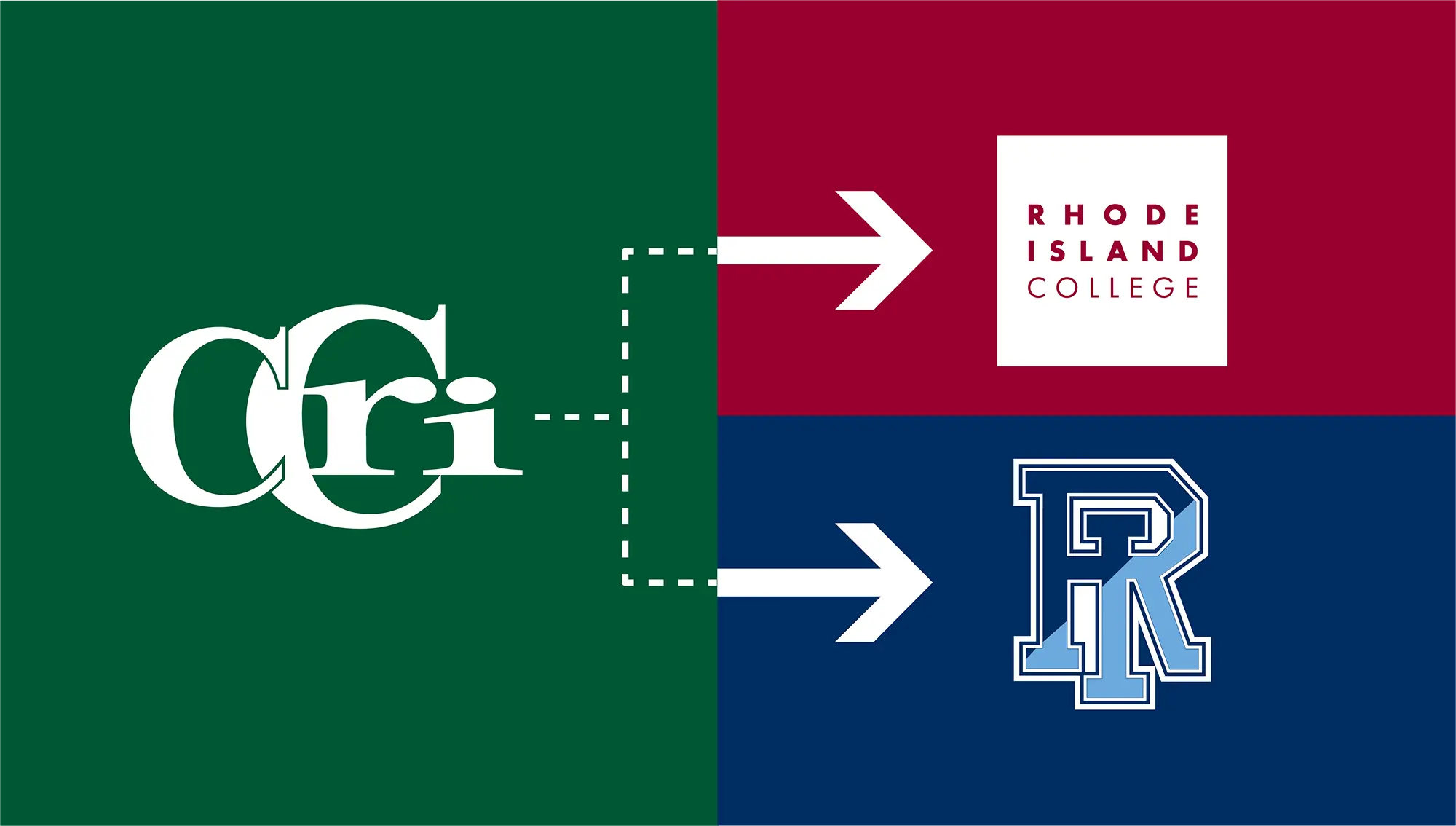
Check out the Joint Admissions Agreement if you are interested in transferring to Rhode Island College or the University of Rhode Island. The JAA program offers seamless transfer to RIC or URI with additional benefits. Transfer information, events, and articulations are available on the Transfer Center website.
More Information
- Receive and accession tissue specimens.
- Prepare tissue specimens for microscopic examinations, including all routine procedures.
- Assist with gross examination and frozen section procedures in histopathology.
- Identify tissue structures and their staining characteristics.
- Perform preventive and corrective maintenance of equipment and instruments or refer to appropriate sources for repairs.
- Recognize factors that affect procedures and results, and take appropriate action within predetermined limits when corrections are indicated.
- Perform and monitor quality control within predetermined limits.
- Apply principles of safety.
- Demonstrate professional conduct and interpersonal communication skills with patients, laboratory personnel, and other healthcare professions, and with the public.
- Exercise principles of management, safety and supervision.
- Recognize the responsibilities of other laboratory and healthcare professionals and interact with them with respect for their jobs and patient care.
- Recognize and act upon individual needs for continuing education as a function of growth and maintenance of professional competence.
- Implementing emergency procedures and administering first aid including CPR.
CCRI will provide services and training, without discrimination, to academically qualified persons who meet the following technical standards required to participate in the Histotechnician Program.
Physical Requirements: The position of Histotechnician has been given a strength ratio of LIGHT WORK by
the U.S. Dictionary of Occupational Titles (exerting up to 20 pounds of force occasionally,
and/or up to 10 pounds of force frequently, and/or a negligible amount of force 2/3
or more of the time to move objects). The position involves walking, standing and
sitting for prolonged periods, as well as stooping, bending, lifting and carrying.
The ability to operate and control equipment is necessary to include starting, stopping,
adjusting and observing gauges, dials, etc.
Visual Observation: The student must possess visual acuity sufficient to allow for each of the following:
- Differentiation of colors and color changes during the performance of histologic procedures.
Color blindness itself does not preclude admission. - Differentiation and identification of specimens using microscopic techniques.
- Reading lab instrument technical procedure manuals, standard operating procedures, specimen labels and other pertinent materials for patient care and professional practice.
- Numerical Ability: Requires the ability to add, subtract, multiply and divide all units of measure.
Form/Special Ability: Requires the ability to inspect dimensions of items and to visually read information and data.
Motor Functions: The student must possess motor and dexterity skills sufficient to permit each of the following:
- Lift and handle typical hand-held medical laboratory equipment and tools.
- Manipulate histology instruments and equipment in a manner consistent with standards of histology practice.
- Perform all routine functions and tasks required in the various departments of the histology laboratory.
Communication Skills: The student must possess verbal and non-verbal skills adequate for transmitting and receiving information from patients and hospital personnel. The student must be able to read, write, speak and comprehend English with sufficient skill to communicate.
Behavioral and Social Skills: The student must exhibit behavioral and social skills that are acceptable to the college and hospital settings. Students must be able to attend to work assignments and instructions/orders given.
Health Form: The student must submit a completed health form to include required inoculations and physical exam before beginning clinical rotations. CPR Healthcare Provider (AHA) is required and a copy of card must be submitted to the Allied and Rehabilitative Health Department.
- What is a histotechnician?
- Where do these individuals work?
- What is the average salary for a histotechnician?
- What type of training is required?
- How long will it take to complete the program?
- What are the necessary high school courses?
- What does the Histotechnician Program consist of at CCRI?
- What is the typical cost of this program?
- If I apply, what are the chances of getting accepted?
- Whom may I contact in the department for more information?
Q: What is a histotechnician?
A: A histotechnician is an individual who is trained in the preparation and staining of tissue slides for microscopic examination and disease diagnosis by the pathologist. Histotechnicians may be employed in a variety of areas, such as operating rooms, clinics, doctors' offices, research, veterinary pathology, marine biology, forensic pathology, and the pharmaceutical industry. Histotechnicians may preserve organs for later examination, perform enzyme biochemistry or electron microscopy. Histotechnicians may also assist the pathologist in the preparation of frozen tissue sections which are used to provide rapid diagnosis.
A histotechnician must be able to discriminate between closely similar items and correction of errors by use of pre-set strategies. They are required to know specific techniques and instruments, and be able to recognize factors which directly affect procedures and results. The technician monitors quality control programs within predetermined parameters.
Q: What is the average salary for a histotechnician?
A: The national average salary for histotechnicians is approximately $47,200, although salaries vary by area of the country. The entry-level salary in Rhode Island is $47,500 - $59,738 per year, and usually includes benefits. Evening and part-time positions are available with shift differential.
Q: What type of training is required?
A: A two-year program that includes histology training is required. At the end of this experience, the students are eligible to take a registry examination which certifies them to work in this field and become licensed as a histotechnician by the State of Rhode Island. The training program at CCRI is an associate degree program that combines theory with technical skills. This program includes a supervised clinical experience at a local hospital. The student will receive an Associate in Applied Science degree (AAS) with a major in Histology.
Q: How long will it take to complete the program?
A: This program can be completed in two consecutive years. However, if a student must work, all the non-technical courses can be taken at his or her convenience (evening or day). The technical courses are offered only during the daytime and must be taken in sequence unless special permission is obtained from the Program Director. At a student's request, a program of study can be designed to fit his or her special needs as long as there is a space available at the clinical site and arrangements have been made with the Program Director prior to the student's entrance into the technical courses.
Q: What are the necessary high school courses?
A: Any high school student interested in this program should be enrolled in a math and science curriculum, which includes algebra and basic sciences (including biology and chemistry). The student should also have good reading and writing skills, and be ready for English Composition I at the college level.
Q: What does the Histotechnician Program consist of at CCRI?
A: The program contains three semesters at the clinical site (hospital): 2 days/week for 15 weeks in the spring semester of freshman year, 3 days/week for 15 weeks in the fall semester of sophomore year, and 4 days/week for 15 weeks in the spring semester of sophomore year. Training occurs during the daytime from 8:00 a.m. to 4:00 p.m. The student must also take general education requirements. A minimum grade of C or better is required, and the student must have a 2.0 cumulative grade point average to graduate from the college.
Q: What is the typical cost of this program?
A: The typical cost of the program for a full-time student is the current CCRI tuition for five semesters, books, lab coats, uniforms and travel expenses to the clinical sites. Additional information can be found on the Bursar website at www.ccri.edu/bursar.
Q: If I apply, what are the chances of getting accepted?
A: CCRI accepts approximately 15 students into the Histotechnician Program each March.
Q: Whom may I contact for more information?
- Email Michael Hynes, Office of One Stop Student Services, or Tel: (401) 825-2266
Office of One Stop Student Services
1 Hilton St.
Providence, RI 02905
- Email Maddie Josephs, Program Director, or Tel: (401) 333-7418
Allied and Rehabilitative Health Department
1762 Louisquisset Pike
Lincoln, RI 02865
Q: What online resources would you recommend?
A: American Society for Clinical Laboratory Science (ASCLS)
www.ascls.org - click on 'careers center'
This is the professional organization for clinical laboratory science practitioners.
A: American Society for Clinical Pathology
www.ascp.org
Information on medical laboratory careers
A: National Society for Histotechnology
www.nsh.org
|
Annual statistics |
Number of graduates |
Number of graduates who took exam |
# Pass |
# Fail |
% Pass |
Scores, National Mean |
Scores, Program Mean |
|---|---|---|---|---|---|---|---|
|
2023 |
3 |
2 |
2 |
0 |
100 |
449 |
411 |
|
2024 |
5 |
4 |
4 |
0 |
100 |
454 |
493 |
|
2025 |
5 |
3 |
2 |
1 |
67 |
470 |
520 |
|
3 Year Pass Rate Average: 89% |
|||||||
|
Annual statistics |
Number of Graduates |
*Completion Rate |
Job Placement Rate |
|---|---|---|---|
|
2023 |
3 |
100% |
100% |
|
2024 |
5 |
100% |
100% |
|
2025 |
5 |
100% |
100% |
*Completion Rate is determined by the number of students who began the second half of the program (semester 4 & 5) and graduated
Where Opportunity Meets Affordability
Why Choose CCRI?
CCRI, one of New England's most affordable colleges, is now completely free for Rhode Island students heading straight from high school thanks to the Rhode Island Promise Scholarship. For those pursuing a bachelor's degree, starting at CCRI can also lead to up to 30% discounted tuition at Rhode Island College or the University of Rhode Island upon transferring.

Our Services
We Are Here for You!
CCRI puts your success at the center of all we do. Staff from our Advising and Counseling, The Tutoring Center, Career Services, Benefits Hub, Financial Aid, Veteran Services, and the entire Division of Student Services is here every step of the way to help you reach your academic and career goals.
At One Stop we assist prospective, current, and former students, with a variety of processes including applying to college, checking financial aid status, turning in required documents, registering for classes, paying your bill, and more!
The Advising Center offers a full range of services for CCRI students. These services include academic advising, career, educational and personal counseling services.
CCRI's Tutoring Center provides free in-person and online tutoring and academic coaching to help you achieve success.
Career Services collaborates with and prepares our diverse student population to make well-informed career decisions through professional readiness, exploration, and work-based learning opportunities.
The Benefits Hub offers students basic needs assistance grounded in respect, trust, and equity.
CCRI offers financial assistance to students who might otherwise be unable to further their education without such support. The Financial Aid Department is here to guide you through the process.
The CCRI Veteran Services Office is committed to being a resource to all VA education beneficiaries.
Where Campus Life Comes to Life!
Beyond the Classroom
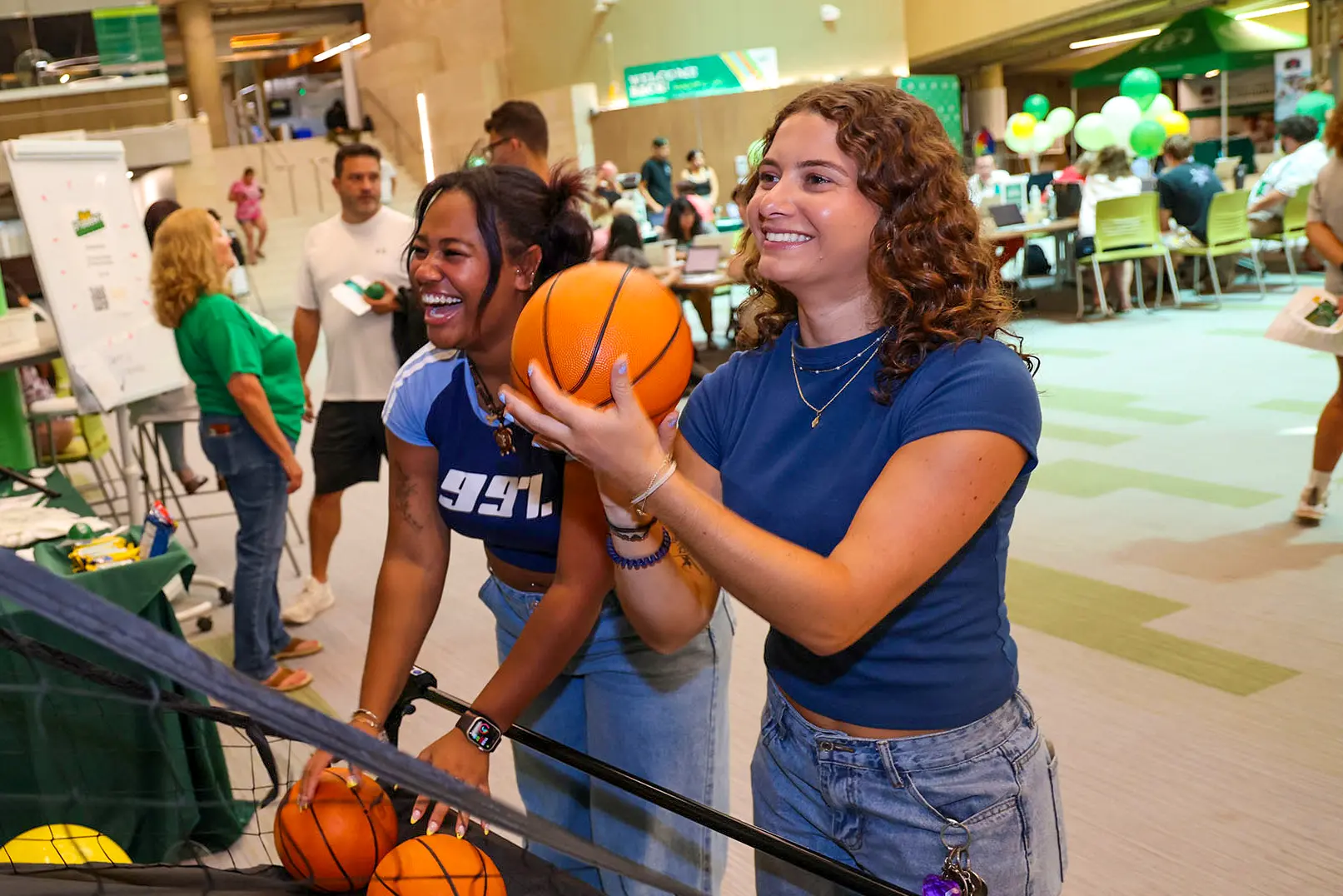
CCRI offers a vibrant campus life with a variety of events, athletic programs, and student clubs to keep you engaged and connected throughout your college experience.
Related Resources
Welcome to CCRI
Apply for Free Today!We're excited about your interest in attending the Community College of Rhode Island! Whether you're looking to discover your career path, start or complete your college degree, or take classes to enrich your life, we look forward to having you join our community!