Diagnostic Medical Sonography - Associate in Applied Science
Occupational Title: Diagnostic Medical Sonographer
This program may be completed at the Flanagan (Lincoln) Campus.
The Diagnostic Medical Sonography program is accredited by the Commission on Accreditation of Allied Health Education Programs, 25400 US Highway 19 North, Suite 158, Clearwater, FL, 33763; 727-210-2350, upon recommendation of the Joint Review Committee on Education in Diagnostic Medical Sonography, 6021 University Blvd., Suite 500, Ellicott City, MD, 21043; 443-973-3251.
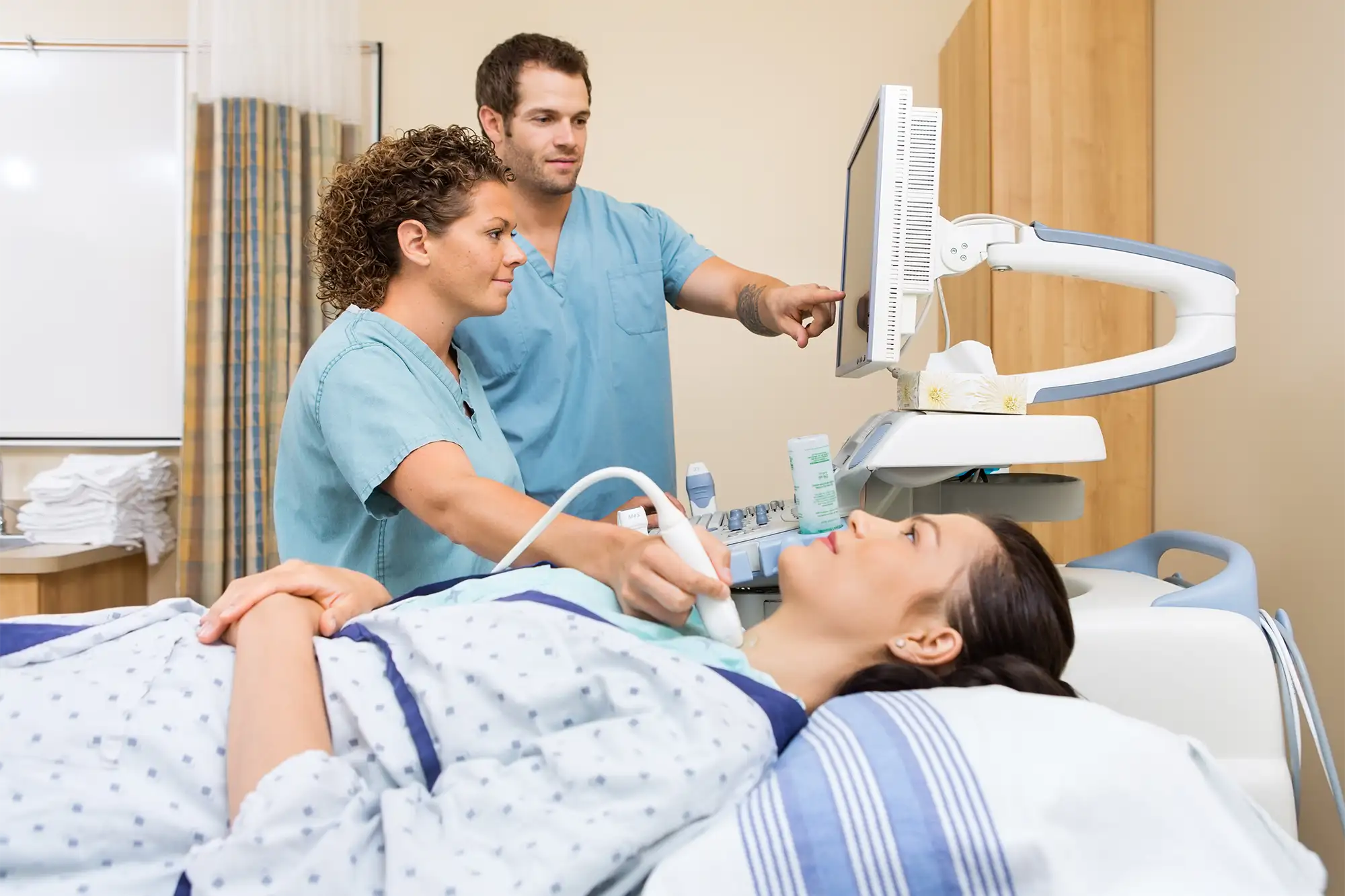
Diagnostic medical sonography is a rapidly growing technology used to locate, evaluate and record pertinent anatomical, pathological and functional data to aid the physician in the diagnosis and prevention of disease. The Diagnostic Medical Sonography associate degree program is a 24-month program that begins in September. Students participate in five semesters of classroom instruction at CCRI and associated clinical education facilities to learn a wide variety of imaging techniques.
Students must select a concentration in either abdomen-extended sonography, vascular sonography or echocardiography.
For concentration information see:
- Abdomen-Extended – Society of Diagnostic Medical Sonographers (SDMS)
- Vascular – Society of Vascular Ultrasound (SVU)
- Echocardiography – American Society of Echocardiography (ASE)
- or contact Paula Cardillo, CCRI DMSD program director, [email protected]
Students successfully completing the program are eligible to take the American Registry of Diagnostic Medical Sonographers (ARDMS) registry examination. Graduates of this program are prepared for entry-level employment as sonographers (ultrasonographers) in hospitals, clinics, and private offices and/or for transfer to bachelor’s degree programs.
Technical Standards: The physical activity (strength) level for sonographers (078.364.010) is classified as “light” by the Department of Labor in the Dictionary of Occupational Titles
Note: Many courses require prerequisites, corequisites and/or testing. See course descriptions for details.
General Policies
See important general policies in the beginning of this section on the performance-based Health Sciences application process, academic progress, advanced placement, background check, CPR certification, health insurance, health records, reinstatement, transportation, uniforms, and equipment.
Minimum Requirements to Apply to the Diagnostic Medical Sonography Program
- CCRI application – Complete and submit an Application for Enrollment to CCRI. General Studies should be the first choice; Pre-Diagnostic Medical Sonography (DMSD) should be the second choice
- High school transcript – An official copy of a high school or GED® transcript, including date of graduation, must be provided. If the applicant holds a baccalaureate degree from an accredited college or university, the high school transcript may be waived; a college transcript must indicate completion and degree awarded
- CCRI uses a multiple measures approach to determine admission into Health Science programs (For example: High School
and GED® transcripts, SAT, ACT, HESI A2 or ACCUPLACER scores). Placement can also
be determined by taking college level English and Math courses. Anyone with a degree
from an institutionally accredited higher education institution may have this requirement
waived following submission of the official college transcript. If using ACCUPLACER, the following guidelines are used:
- Placement testing – Complete a standardized test (ACCUPLACER) issued by CCRI’s Advising Center. Students may NOT retake the ACCUPLACER test before completing the remedial course/courses. Note: For application purposes, ACCUPLACER testing can be waived for students who provide documentation of a bachelor’s degree or higher. Students are advised that individual departments may still require ACCUPLACER testing as a prerequisite for their courses.
- Reading comprehension test must show competency of 90 or above in the Classic ACCUPLACER or a score of 259 or above in the Next Generation ACCUPLACER or students must complete Reading and Study Skills Program (ENGL 1002) with a grade of B- or better.
- Complete courses required for admission with a grade of C or better:
- Composition I (ENGL 1010) (or ENGL 1010A). Composition I for Speakers of English as a Second Language (ESL) (ENGL 1300) will not substitute for Composition I (ENGL 1010).
- College Algebra (MATH 1200) or (MATH 1200C), Pre-Calculus Mathematics (MATH 2111), or Calculus I (MATH 2141).
- Physics of Everyday Life (PHYS 1000). General Physics I (PHYS 1030) also meets this requirement.
- Complete courses required for admission with a grade of B- or better:
- Human Biology (BIOL 1070)
- GPA- A cumulative grade point average of 2.0 or better for all college courses taken.
- Aptitude Examination – Take the HESI (Health Educational System Incorporated) Exam administered through the Advising Center. Students are limited to two (2) attempts within a 12-month period. A minimum of two (2) weeks between exams is required.
- Health Sciences application – Complete and submit performance-based Health Sciences application including a preadmission
degree evaluation during the open enrollment period.
- Important: Submission of a performance-based Health Sciences application does not guarantee acceptance to the program. Acceptance is based on points earned as listed in the program acceptance criteria point system. (See CCRI's Dean of Health & Rehabilitative Sciences.) At the time of admission, students must meet the current admission requirements. Students declining acceptance into the program for the semester offered must resubmit a performance-based Health Sciences application and meet the current admission requirements. Once accepted, students must attend a mandatory orientation conducted by the Allied and Rehabilitative Health Department.
- Background check – Students are required to submit a background check when directed by notification from One Stop Student Services.
Program Requirements
- The major requirements for this program must be taken in sequence. They are open only to students who are formally accepted into the program.
- Students must complete all courses in the program with a cumulative index of 2.0 to qualify for a certificate.
- No grade less than a C is acceptable in any of the technical courses (DMSD). Students receiving less than a C will be dismissed from the program.
- Program faculty reserve the right to require withdrawal of any student from the program or refuse reinstatement based on the student’s academic, clinical or professional performance.
Program Learning Outcomes
Abdomen-extended Ultrasound Concentration
Upon completion of this program, a student will be able to:
- Demonstrate the ability to communicate orally and in writing.
- Demonstrate the ability to think critically and solve problems in the clinical setting.
- Act as ethical and responsible members of the healthcare team.
- To prepare competent entry-level general sonographers in the cognitive (knowledge), psychomotor (skills), and affective (behavior) learning domains.
- To prepare competent entry-level adult cardiac sonographers in the cognitive (knowledge), psychomotor (skills), and affective (behavior) learning domains.
- To prepare competent entry-level vascular technologists in the cognitive (knowledge), psychomotor (skills), and affective (behavior) learning domains.
Echocardiography Concentration
Upon completion of this program, a student will be able to:
- Demonstrate the ability to communicate orally and in writing.
- Demonstrate the ability to think critically and solve problems in the clinical setting.
- Act as ethical and responsible members of the healthcare team.
- To prepare competent entry-level general sonographers in the cognitive (knowledge), psychomotor (skills), and affective (behavior) learning domains.
- To prepare competent entry-level adult cardiac sonographers in the cognitive (knowledge), psychomotor (skills), and affective (behavior) learning domains.
- To prepare competent entry-level vascular technologists in the cognitive (knowledge), psychomotor (skills), and affective (behavior) learning domains.
Vascular Concentration
Upon completion of this program, a student will be able to:
- Demonstrate the ability to communicate orally and in writing.
- Demonstrate the ability to think critically and solve problems in the clinical setting.
- Act as ethical and responsible members of the healthcare team.
- To prepare competent entry-level general sonographers in the cognitive (knowledge), psychomotor (skills), and affective (behavior) learning domains.
- To prepare competent entry-level adult cardiac sonographers in the cognitive (knowledge), psychomotor (skills), and affective (behavior) learning domains.
- To prepare competent entry-level vascular technologists in the cognitive (knowledge), psychomotor (skills), and affective (behavior) learning domains.
Requirements
| Code | Title | Hours |
|---|---|---|
| Preadmission General Education Requirements - All Concentrations | ||
| Courses must be taken prior to program admission: | ||
| BIOL 1070 | Human Biology | 3 |
| ENGL 1010 | Composition I (or ENGL 1010A) | 3 |
| PHYS 1000 | Physics of Everyday Life | 4 |
| Choose ONE of the following: | 3-4 | |
| College Algebra (or MATH 1200C; only counts as a general education math course for students enrolled in the following career-oriented programs: CHMT, DMSD/DMSE/DMSV, and XRAY) | ||
| Pre-Calculus Mathematics (May need to take a prerequisite course - see course description for details) | ||
| Calculus I (May need to take a prerequisite course - see course description for details) 2 | ||
| Subtotal | 13-14 | |
| General Education Requirements - All Tracks | ||
| COMM 1010 | Communication Fundamentals^ (Work-Based Learning Course) | 3 |
| Literature Elective | 3 | |
| PSYC 2010 | General Psychology | 4 |
| PSYC 2030 | Developmental Psychology | 3 |
| Choose ONE of the following: | ||
| Subtotal | 13 | |
| Concentration Requirements | ||
| Select one of the following concentrations: | 37 | |
|
Echocardiography Concentration (DMSE)
|
||
|
General Ultrasound Concentration (DMSD)
|
||
|
Vascular Concentration (DMSV)
|
||
| Subtotal | 37 | |
| Total Hours | 63-64 | |
Vascular Concentration (DMSV)
| Code | Title | Hours |
|---|---|---|
| Major Requirements (DMSV) | ||
| DMSD 2100 | Patient Care in Sonography | 3 |
| DMSD 2210 | Sonographic Physics | 4 |
| DMSD 2220 | Sonographic Imaging | 3 |
| DMSD 2245 | Sonographic Anatomy | 3 |
| DMSD 2250 | Vascular Ultrasound I | 4 |
| DMSD 2251 | Vascular Ultrasound II | 4 |
| DMSD 2252 | Advanced Vascular Ultrasound | 4 |
| DMSD 2253 | Vascular Practicum I^ (Work-Based Learning Course) | 3 |
| DMSD 2254 | Vascular Practicum II^ (Work-Based Learning Course) | 3 |
| DMSD 2255 | Vascular Practicum III^ (Work-Based Learning Course) | 3 |
| DMSD 2500 | Diagnostic Medical Sonography Seminar | 3 |
| Subtotal | 37 | |
| Total Hours | 37 | |
Total DMSV Program Credits 66-67
Echocardiography Concentration (DMSE)
| Code | Title | Hours |
|---|---|---|
| Major Requirements (DMSE) | ||
| DMSD 2100 | Patient Care in Sonography | 3 |
| DMSD 2210 | Sonographic Physics | 4 |
| DMSD 2220 | Sonographic Imaging | 3 |
| DMSD 2245 | Sonographic Anatomy | 3 |
| DMSD 2260 | Echocardiography I | 4 |
| DMSD 2261 | Echocardiography II | 4 |
| DMSD 2262 | Advanced Echocardiography | 4 |
| DMSD 2263 | Echocardiography Practicum I^ (Work-Based Learning Course) | 3 |
| DMSD 2264 | Echocardiography Practicum II^ (Work-Based Learning Course) | 3 |
| DMSD 2265 | Echocardiography Practicum III^ (Work-Based Learning Course) | 3 |
| DMSD 2500 | Diagnostic Medical Sonography Seminar | 3 |
| Subtotal | 37 | |
| Total Hours | 37 | |
Total DMSE Program Credits 66-67
Abdomen-extended Ultrasound Concentration (DMSD)
| Code | Title | Hours |
|---|---|---|
| Major Requirements (DMSD) | ||
| DMSD 2100 | Patient Care in Sonography | 3 |
| DMSD 2210 | Sonographic Physics | 4 |
| DMSD 2220 | Sonographic Imaging | 3 |
| DMSD 2230 | Abdominal Ultrasound | 4 |
| DMSD 2235 | Ultrasound for Small Parts, Gynecology and Male Pelvis | 4 |
| DMSD 2240 | Obstetrical Ultrasound | 4 |
| DMSD 2241 | General Ultrasound Practicum I^ (Work-Based Learning Course) | 3 |
| DMSD 2242 | General Ultrasound Practicum II^ (Work-Based Learning Course) | 3 |
| DMSD 2243 | General Ultrasound Practicum III^ (Work-Based Learning Course) | 3 |
| DMSD 2245 | Sonographic Anatomy | 3 |
| DMSD 2500 | Diagnostic Medical Sonography Seminar | 3 |
| Subtotal | 37 | |
| Total Hours | 37 | |
Total DMSD Program Credits 66-67
Recommended Course Sequence - Echo
| Prerequisites | Hours | |
|---|---|---|
| BIOL 1070 | Human Biology | 3 |
| ENGL 1010 | Composition I (or ENGL 1010A) | 3 |
| Choose ONE of the following: | 3-4 | |
| College Algebra (or MATH 1200C) | ||
| Pre-Calculus Mathematics | ||
| Calculus I | ||
| Choose ONE of the following: | 4 | |
| Physics of Everyday Life | ||
| General Physics I | ||
| Hours | 13-14 | |
| Year 1 | ||
| Semester 1 | ||
| DMSD 2210 | Sonographic Physics | 4 |
| DMSD 2220 | Sonographic Imaging | 3 |
| DMSD 2245 | Sonographic Anatomy | 3 |
| PSYC 2010 | General Psychology | 4 |
| Hours | 14 | |
| Semester 2 | ||
| DMSD 2100 | Patient Care in Sonography | 3 |
| DMSD 2260 | Echocardiography I | 4 |
| COMM 1010 | Communication Fundamentals^ (Work-Based Learning Course) | 3 |
| Hours | 10 | |
| Summer Session | ||
| DMSD 2261 | Echocardiography II | 4 |
| DMSD 2263 | Echocardiography Practicum I^ (Work-Based Learning Course) | 3 |
| Hours | 7 | |
| Year 2 | ||
| Semester 1 | ||
| DMSD 2262 | Advanced Echocardiography | 4 |
| DMSD 2264 | Echocardiography Practicum II^ (Work-Based Learning Course) | 3 |
| PSYC 2030 | Developmental Psychology | 3 |
| Hours | 10 | |
| Semester 2 | ||
| DMSD 2265 | Echocardiography Practicum III^ (Work-Based Learning Course) | 3 |
| DMSD 2500 | Diagnostic Medical Sonography Seminar | 3 |
| Literature Elective | 3 | |
| Choose ONE of the following: | 3 | |
| Hours | 12 | |
| Total Hours | 66-67 | |
Recommended Course Sequence - Abdomen-extended Ultrasound
| Prerequisites | Hours | |
|---|---|---|
| BIOL 1070 | Human Biology | 3 |
| ENGL 1010 | Composition I (or ENGL 1010A) | 3 |
| Choose ONE of the following: | 3-4 | |
| College Algebra (or MATH 1200C) | ||
| Pre-Calculus Mathematics | ||
| Calculus I | ||
| Choose ONE of the following: | 4 | |
| Physics of Everyday Life | ||
| General Physics I | ||
| Hours | 13-14 | |
| Year 1 | ||
| Semester 1 | ||
| DMSD 2210 | Sonographic Physics | 4 |
| DMSD 2220 | Sonographic Imaging | 3 |
| DMSD 2245 | Sonographic Anatomy | 3 |
| PSYC 2010 | General Psychology | 4 |
| Hours | 14 | |
| Semester 2 | ||
| DMSD 2100 | Patient Care in Sonography | 3 |
| DMSD 2230 | Abdominal Ultrasound | 4 |
| COMM 1010 | Communication Fundamentals^ (Work-Based Learning Course) | 3 |
| Hours | 10 | |
| Summer Session | ||
| DMSD 2235 | Ultrasound for Small Parts, Gynecology and Male Pelvis | 4 |
| DMSD 2241 | General Ultrasound Practicum I^ (Work-Based Learning Course) | 3 |
| Hours | 7 | |
| Year 2 | ||
| Semester 1 | ||
| DMSD 2240 | Obstetrical Ultrasound | 4 |
| DMSD 2242 | General Ultrasound Practicum II^ (Work-Based Learning Course) | 3 |
| PSYC 2030 | Developmental Psychology | 3 |
| Hours | 10 | |
| Semester 2 | ||
| DMSD 2243 | General Ultrasound Practicum III^ (Work-Based Learning Course) | 3 |
| DMSD 2500 | Diagnostic Medical Sonography Seminar | 3 |
| Literature Elective | 3 | |
| Choose ONE of the following: | 3 | |
| Hours | 12 | |
| Total Hours | 66-67 | |
Recommended Course Sequence - Vascular
| Prerequisites | Hours | |
|---|---|---|
| BIOL 1070 | Human Biology | 3 |
| ENGL 1010 | Composition I (or ENGL 1010A) | 3 |
| Choose ONE of the following: | 3-4 | |
| College Algebra (or MATH 1200C) | ||
| Pre-Calculus Mathematics | ||
| Calculus I | ||
| Choose ONE of the following: | 4 | |
| Physics of Everyday Life | ||
| General Physics I | ||
| Hours | 13-14 | |
| Year 1 | ||
| Semester 1 | ||
| DMSD 2210 | Sonographic Physics | 4 |
| DMSD 2220 | Sonographic Imaging | 3 |
| DMSD 2245 | Sonographic Anatomy | 3 |
| PSYC 2010 | General Psychology | 4 |
| Hours | 14 | |
| Semester 2 | ||
| DMSD 2100 | Patient Care in Sonography | 3 |
| DMSD 2250 | Vascular Ultrasound I | 4 |
| COMM 1010 | Communication Fundamentals^ (Work-Based Learning Course) | 3 |
| Hours | 10 | |
| Summer Session | ||
| DMSD 2251 | Vascular Ultrasound II | 4 |
| DMSD 2253 | Vascular Practicum I^ (Work-Based Learning Course) | 3 |
| Hours | 7 | |
| Year 2 | ||
| Semester 1 | ||
| DMSD 2252 | Advanced Vascular Ultrasound | 4 |
| DMSD 2254 | Vascular Practicum II^ (Work-Based Learning Course) | 3 |
| PSYC 2030 | Developmental Psychology | 3 |
| Hours | 10 | |
| Semester 2 | ||
| DMSD 2255 | Vascular Practicum III^ (Work-Based Learning Course) | 3 |
| DMSD 2500 | Diagnostic Medical Sonography Seminar | 3 |
| Literature Elective | 3 | |
| Choose ONE of the following: | 3 | |
| Hours | 12 | |
| Total Hours | 66-67 | |
Transfer
Please meet with an Academic Advisor/Student Success Coach if you are interested in earning a bachelor's degree. Your Academic Advisor will help you select the courses that best prepare you for transfer to a four-year college or university.
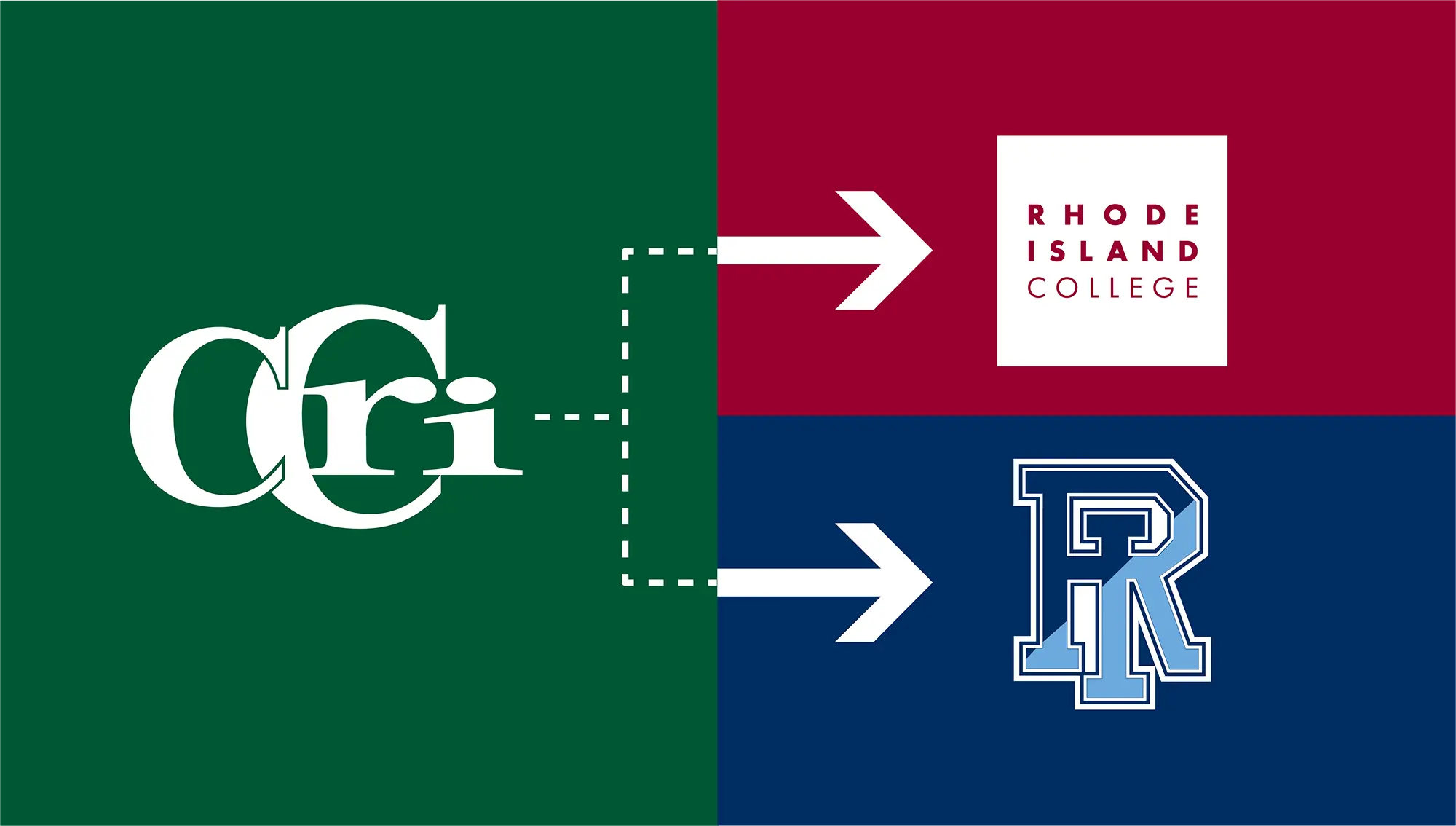
Check out the Joint Admissions Agreement if you are interested in transferring to Rhode Island College or the University of Rhode Island. The JAA program offers seamless transfer to RIC or URI with additional benefits. Transfer information, events, and articulations are available on the Transfer Center website.
More Information
In order to perform the tasks required of sonographers, certain physical capabilities are required. Students must demonstrate the ability to perform required functions as a routine part of either classroom, laboratory or clinical education. Students should be aware that successful completion of the Diagnostic Medical Sonography Program will depend upon the ability to meet the following technical standards:
- A reasonable amount of strength and mobility are required for the following reasons:
- Sonographers must be able to lift, move or push heavy equipment, mobile x-ray equipment, stretchers and/or wheelchairs with patients in them.
- Sonographers must be able to help in lifting patients who may be paralyzed, comatose or otherwise incapacitated, from stretchers or wheelchairs.
- Sonographers must be able to provide physical assistance and care for patients in a timely manner in all circumstances.
- Sonographers must be able to manipulate an ultrasound unit.
- Manual dexterity, good motor skills and eye-hand coordination are necessary in order
to:
- Push/pull equipment
- Don surgical gloves
- Assist radiologist
- Align patient
- Visual acuity (the ability to see fine lines) and intensity discrimination (the ability to distinguish gradual changes in blacks, greys and whites) are necessary in order to evaluate ultrasound exams for technical quality.
- The ability to communicate orally and in writing is a requirement for sonographers
in order to:
- Ascertain and record patient histories.
- Explain and complete patient consent forms.
- Provide clear and audible directions to patients face-to-face
- These standards are capabilities associated with the successful practice of diagnostic medical sonography. Under no circumstances are they considered conditions for admission to the Diagnostic Medical Sonography Program
- What is a diagnostic medical sonographer?
- How can I become a diagnostic medical sonographer?
- What kind of credentials are necessary to work as a diagnostic medical sonographer?
- Where do sonographers work?
- What are sonographers' salaries like?
- What is the outlook for jobs in the future?
- What should an interested student do to prepare for entry into a sonography program?
- Is there a health hazard for those who work as sonographers?
- What is the typical cost of this program?
- Whom may I contact for more information?
Q: What is a diagnostic medical sonographer?
A: A diagnostic medical sonographer uses sound waves, a knowledge of anatomy, and imaging principles to aid physicians in the diagnosis of disease, in monitoring patient progress, or in research.
Q: How can I become a diagnostic medical sonographer?
A: Diagnostic medical sonography is a two-year, five-semester program designed to prepare students for employment in this imaging specialty. College courses include classroom instruction coordinated with clinical practice. Applicants must have a high school diploma or GED and make application to the program.
Q: What kind of credentials are necessary to work as a diagnostic medical sonographer?
A: Students who successfully complete this associate degree program are prepared to take national registry examinations given by the American Registry of Diagnostic Medical Sonographers. National certification enhances employment opportunities.
Q: Where do sonographers work?
A: Sonographers work in hospitals, private imaging facilities and physicians' offices. In addition to full-time positions, sonographers may hold part-time or on-call positions. Flexible hours are often available.
Q: What are sonographers' salaries like?
A: Starting salaries at the present time average $26.00 to $29.00 per hour for a new technologist or approximately $54,000 - $60,000 per year. Hospital benefit packages are excellent and include health care, dental coverage, insurance, vacation and sick time. Private facilities may vary somewhat in the benefits they offer.
Q: What is the outlook for jobs in the future?
A: According to the Occupational Outlook Handbook, job opportunities in the field will continue into the twenty-first century.
Q: What should an interested student do to prepare for entry into a sonography program?
A: Have a good background in math and science. Develop good reading and communication skills. Take placement exams in math and English as early as possible. Graduates of other educational programs may be able to transfer general education courses if appropriate.
Q: Is there a health hazard for those who work as a sonographer?
A: There is no documented health hazard for those working with medical sonography equipment.
Q: What is the typical cost of this program?
A: The typical cost of the program for a full-time student is the current CCRI tuition and fees, laboratory fees, books, uniforms and travel expenses to the clinical sites. Additional information can be found on the Bursar website at www.ccri.edu/bursar.
Q: Whom may I contact for more information?
Contact The American Registry of Diagnostic Medical Sonographers for certification requirements: http://www.ardms.org/Pages/default.aspx
Contact Michael Hynes, One Stop Student Services, at the Warwick Campus for information about the Diagnostic Medical Sonography Program. The address is:
Michael Hynes
Office of One Stop Student Services
Community College of Rhode Island
400 East Avenue
Warwick, RI 02886
(401) 825-2266
E-mail: [email protected]
If more specific information is needed, contact Paula Cardillo, Program Director, at (401) 333-7449 or e-mail [email protected].
This is the program effectiveness data for the Diagnostic Medical Sonography program at the Community College of Rhode Island.
CAAHEP Accredited Concentrations: Abdominal-Extended, Obstetrics &
Gynecology, Adult Cardiac and Vascular
Student Retention
Total number of graduates and total number of students enrolled
| Cohort Number | Track Name (if applicable) | Number of Graduates | Number Enrolled | Retention Percentage |
|---|---|---|---|---|
| 1 | Abdomen-Extended, OB/GYN | 9 | 11 | 82% |
| 2 | Adult Cardiac | 6 | 7 | 86% |
| 3 | Vascular | 5 | 7 | 71% |
| Cohort Number | Track Name (if applicable) | Number of Graduates | Number Enrolled | Retention Percentage |
|---|---|---|---|---|
| 1 | Abdomen-Extended, OB/GYN | 7 | 7 | 100% |
| 2 | Adult Cardiac | 5 | 7 | 71% |
| 3 | Vascular | 4 | 6 | 67% |
| Cohort Number | Track Name (if applicable) | Number of Graduates | Number Enrolled | Retention Percentage |
|---|---|---|---|---|
| 1 | Abdomen-Extended, OB/GYN | 7 | 7 | 100% |
| 2 | Adult Cardiac | 4 | 6 | 67% |
| 3 | Vascular | 5 | 6 | 83% |
3-Year Average Student Retention
- Abdomen-Extended, OB/GYN: 94%
- Adult Cardiac: 75%
- Vascular: 74%
Job Placement
Total number of graduates employed in 6 months and total number of graduates
| Cohort Number | Track Name (if applicable) | Number Employed | Number of Graduates | Job Placement Percentage |
|---|---|---|---|---|
| 1 | Abdomen-Extended, OB/GYN | 9 | 9 | 100% |
| 2 | Adult Cardiac | 6 | 6 | 100% |
| 3 | Vascular | 5 | 5 | 100% |
| Cohort Number | Track Name (if applicable) | Number Employed | Number of Graduates | Job Placement Percentage |
|---|---|---|---|---|
| 1 | Abdomen-Extended, OB/GYN | 7 | 7 | 100% |
| 2 | Adult Cardiac | 5 | 5 | 100% |
| 3 | Vascular | 4 | 4 | 100% |
| Cohort Number | Track Name (if applicable) | Number Employed | Number of Graduates | Job Placement Percentage |
|---|---|---|---|---|
| 1 | Abdomen-Extended, OB/GYN | 7 | 7 | 100% |
| 2 | Adult Cardiac | 4 | 4 | 100% |
| 3 | Vascular | 5 | 5 | 100% |
3-Year Average Job Placement Percentage
- Abdomen-Extended, OB/GYN: 100%
- Adult Cardiac: 100%
- Vascular: 100%
Test Takers Rate
Total number of test takers and total number of graduates
| Cohort Number | Concentration | Number of Test Takers | Number of Graduates | Test Takers Percentage |
|---|---|---|---|---|
| 1 | ABDOMEN-EXTENDED | 5 | 9 | 56% |
| 1 | OBSTETRICS & GYNECOLOGY | 6 | 9 | 67% |
| 2 | ADULT CARDIAC | 6 | 6 | 100% |
| 3 | VASCULAR | 5 | 5 | 100% |
| Cohort Number | Concentration | Number of Test Takers | Number of Graduates | Test Takers Percentage |
|---|---|---|---|---|
| 1 | ABDOMEN-EXTENDED | 4 | 7 | 57% |
| 1 | OBSTETRICS & GYNECOLOGY | 6 | 7 | 86% |
| 2 | ADULT CARDIAC | 5 | 5 | 100% |
| 3 | VASCULAR | 4 | 4 | 100% |
Where Opportunity Meets Affordability
Why Choose CCRI?
CCRI, one of New England's most affordable colleges, is now completely free for Rhode Island students heading straight from high school thanks to the Rhode Island Promise Scholarship. For those pursuing a bachelor's degree, starting at CCRI can also lead to up to 30% discounted tuition at Rhode Island College or the University of Rhode Island upon transferring.

Our Services
We Are Here for You!
CCRI puts your success at the center of all we do. Staff from our Advising and Counseling, The Tutoring Center, Career Services, Benefits Hub, Financial Aid, Veteran Services, and the entire Division of Student Services is here every step of the way to help you reach your academic and career goals.
At One Stop we assist prospective, current, and former students, with a variety of processes including applying to college, checking financial aid status, turning in required documents, registering for classes, paying your bill, and more!
The Advising Center offers a full range of services for CCRI students. These services include academic advising, career, educational and personal counseling services.
CCRI's Tutoring Center provides free in-person and online tutoring and academic coaching to help you achieve success.
Career Services collaborates with and prepares our diverse student population to make well-informed career decisions through professional readiness, exploration, and work-based learning opportunities.
The Benefits Hub offers students basic needs assistance grounded in respect, trust, and equity.
CCRI offers financial assistance to students who might otherwise be unable to further their education without such support. The Financial Aid Department is here to guide you through the process.
The CCRI Veteran Services Office is committed to being a resource to all VA education beneficiaries.
Where Campus Life Comes to Life!
Beyond the Classroom
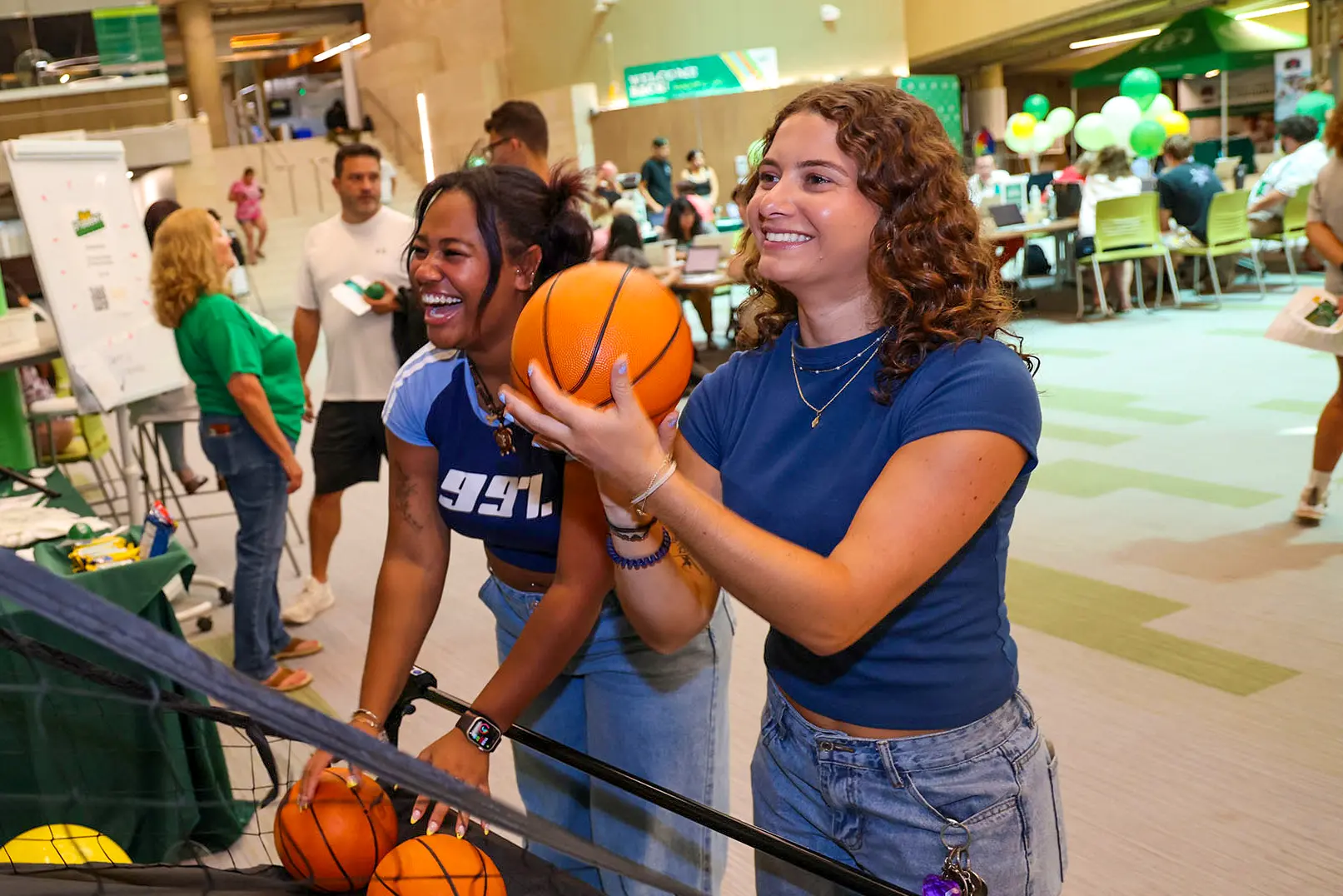
CCRI offers a vibrant campus life with a variety of events, athletic programs, and student clubs to keep you engaged and connected throughout your college experience.
Related Resources
Welcome to CCRI
Apply for Free Today!We're excited about your interest in attending the Community College of Rhode Island! Whether you're looking to discover your career path, start or complete your college degree, or take classes to enrich your life, we look forward to having you join our community!