Rethinking Workforce Training: A Q&A with Cody Fino
06/11/2026
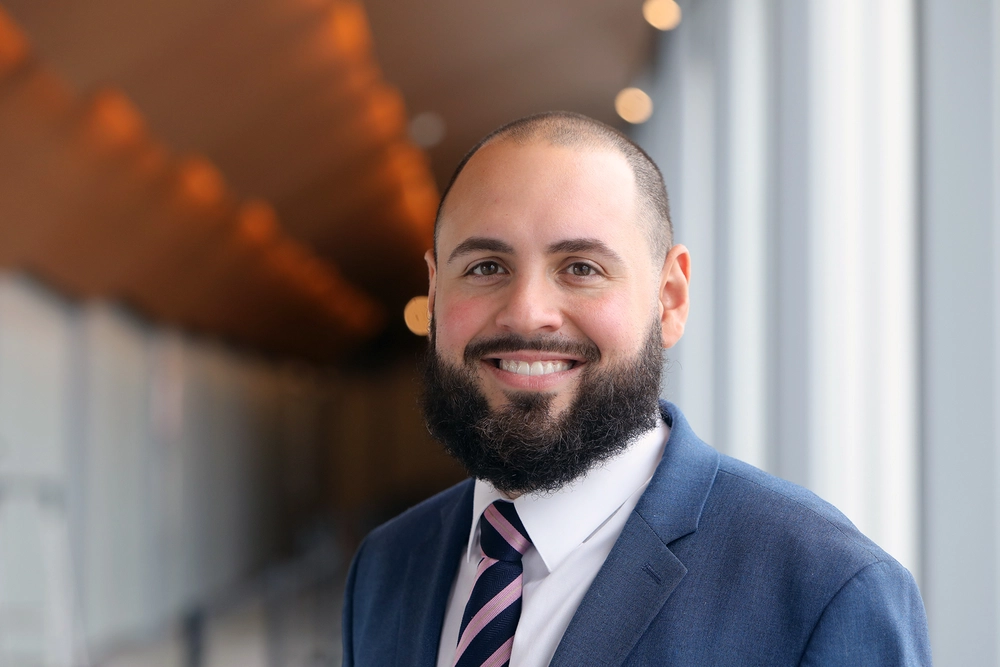
WARWICK, R.I. – Cody Fino’s history with the Community College of Rhode Island began as an 18-year-old, first-generation student trying to figure out his future. Today, as CCRI’s Executive Director of Workforce Partnerships, he designs the exact kind of programs that help today's students find their own footing.
Fino’s team works directly with local employers to turn short-term credentials into long-term career pathways across industries like healthcare, maritime, and advanced manufacturing. Now, with the highly anticipated Workforce Innovation Center on the horizon, he is helping build a state-of-the-art training hub designed to meet Rhode Island's technical labor demands for decades to come.
In this edition of Thinkers, Doers & Achievers, Knight Knowledge spoke with Fino to learn more about his career, workforce education, and more.
Knight Knowledge: Can you take us back to your time as a student at CCRI and walk us through your journey, from those early experiences to your current role as Executive Director for Workforce Partnerships? What moments or influences shaped that path?
Fino: My story with CCRI began when I was 18 and unsure of what I wanted to do professionally. As a first-generation college student, I did not fully understand why I was being told that I had “no choice” but to go to college. What began as someone else’s expectation soon became the defining thread of my adult life. With the exception of a little under two years, CCRI has been part of my journey ever since, from student to part-time staff assistant to Executive Director.
As a student, I became involved on campus and eventually served as Student Government President. That experience connected me with administrators, staff, and faculty who helped shape who I am today. It also made me realize that I wanted to spend my career creating opportunities for students who, in many ways, were a lot like me: capable, still finding their direction, and willing to rely on grit and initiative to keep moving forward.
CCRI helped me see a future for myself before I fully understood what that future could look like. Today, that same mission drives my work: leading teams, developing new programs, expanding access to free and affordable training, and building clearer pathways into careers that can change the direction of someone’s life.
Knight Knowledge: In your role as Executive Director for Workforce Partnerships, you work closely with students every day. What qualities or experiences do you see in today’s CCRI students that remind you of your own time here?
Fino: I see students who are more capable than they sometimes realize.
Many of our students are balancing jobs, families, financial pressures, and responsibilities outside the classroom. They also may be returning to education after years away, changing careers, or taking a risk on a path they had never considered before. What stands out is their determination and grit. They are willing to bet on themselves and build a brighter future.
That is one of the reasons this work matters so much to me. A student may enter a workforce program unsure whether they belong professionally. A few months later, they have earned a credential, built a professional network, started a career, and developed an entirely different view of what is possible.
Some of my favorite moments are when students return to CCRI after completing a program. They are continuing their education, progressing within their companies, and beginning to think about the next step in their careers. CCRI meets students where they are, but our responsibility is to help them move beyond where they thought they could go.
Knight Knowledge: You were recently recognized by Providence Business News as one of their 40 Under 40 honorees. What does that recognition mean to you, both personally and professionally?
Fino: It is deeply meaningful, particularly because my own journey began as a CCRI student.
Professionally, I see the recognition as a reflection of the work our team has built with employers, community partners, and colleagues across the college. Workforce development is collaborative by nature. Every strong program starts with an employer need, but it succeeds because people are willing to work together to create a real pathway for students.
Personally, the recognition gave me a reason to pause and reflect. When you are focused on building the next program, solving the next challenge, or creating the next partnership, you do not always stop to appreciate the journey.
I kept thinking about how transformative CCRI has been in my own life. I remember being an Access student, visiting my advisor almost every day, hoping that I would become a first-generation college graduate. As I have reflected on the journey that brought me to this moment, I have found myself thinking, “Things like this do not happen to people like me.” To go from that uncertain student to a 40 Under 40 honoree, and to now help lead this work for the college, is something I take seriously.
I hope it sends a message to our students: where you begin does not limit where you can go. CCRI can be the starting point for an extraordinary and rewarding career.
Knight Knowledge: Looking ahead, where do you see the future of workforce training in Rhode Island, and what role do you believe CCRI will continue to play in meeting the state’s evolving needs?
Fino: The future of workforce training cannot be built around isolated programs. It has to be built around pathways.
Rhode Island employers are facing significant workforce needs across healthcare, advanced manufacturing, maritime industries, the skilled trades, hospitality, utilities, public service, information technology, finance, and many other sectors. One of the state’s greatest challenges is closing the gap between the skills and credentials employers need and the opportunities available to Rhode Islanders.
That is where CCRI plays an integral role. We can work directly with employers to identify the skills and credentials they need, build training around real jobs, and create pathways that allow students to keep advancing. A short-term credential should not be a dead end. It should be an on-ramp to employment, a higher wage, an apprenticeship, a certificate, or a degree.
As Rhode Island’s only community college, CCRI has a responsibility to be responsive. When industries evolve, we need to move with them. When employers identify a gap, we need to help close it. Most importantly, when Rhode Islanders are ready to take the next step, we need to make that step visible and attainable.
Knight Knowledge: There’s a lot of excitement around the potential for CCRI’s Workforce Innovation Center. What opportunities does that initiative represent, and what are you most energized about as you think about its impact?
Fino: The Workforce Innovation Center represents a once-in-a-generation opportunity to build the infrastructure Rhode Island needs for the future of workforce development.
The building matters, but the real value is what happens inside it. It will allow CCRI to expand hands-on training in advanced manufacturing, welding, the skilled trades, and other technical fields where employers have significant demand. Students will train on industry-relevant equipment, develop practical skills, and enter the workforce prepared to contribute from day one.
The next phase of workforce development at CCRI will live within this building. Workforce training is no longer a small part of the college. It is growing rapidly, and the Workforce Innovation Center will be a catalyst for transforming thousands of Rhode Islanders’ lives while ensuring that CCRI remains the premier workforce partner for Rhode Island businesses. Just as importantly, the center is designed to become financially self-sustaining, a rare achievement for a public facility.
It will also expand our capacity to serve small and mid-sized companies that have critical workforce needs but may not have the resources to build their own training pipelines.
What energizes me most is the scale of the opportunity. We are not talking about solving one employer’s challenge or launching one new program. We are talking about building a long-term workforce asset for the state: a place where education, industry, and economic development come together to transform lives.
The Workforce Innovation Center is an opportunity to build more than a facility. It is an opportunity to build the talent pipeline that will help Rhode Island compete for decades.
Have something to share?
Submit a StoryHave a story about a student, colleague, or yourself?! Share your story with CCRI and engage with the community.