How CCRI Professor Karen Griscom Empowers the Next Generation of Scholars
03/19/2026
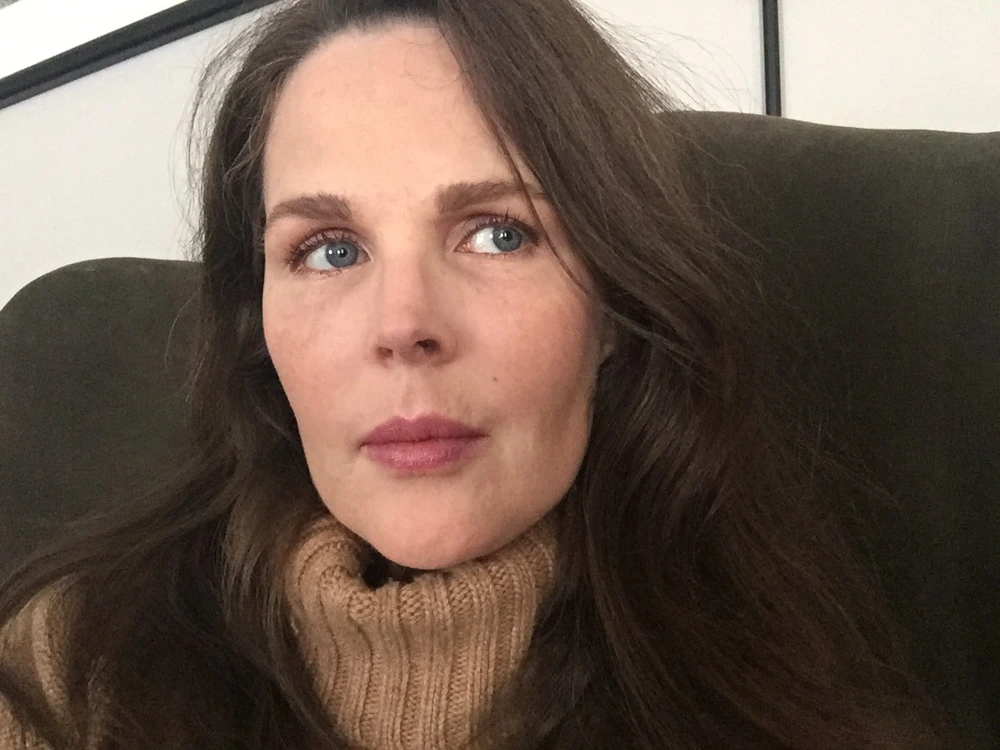
WARWICK, R.I. -- In Professor Karen Griscom’s classroom, literature isn’t just something students read -- it’s something they help shape. A faculty member in CCRI’s English Department, Griscom recently co-authored a featured article in the academic journal Eighteenth-Century Studies highlighting her innovative “feminist teacher-editor” model.
This approach invites students to move beyond traditional coursework and into the role of scholarly collaborators. Working through the Lady’s Museum Project -- an international digital humanities initiative -- CCRI students contribute research and editorial work that becomes part of a growing global archive. The experience not only deepens their understanding of eighteenth-century literature but also demonstrates how community college students can contribute meaningfully to academic scholarship.
In this edition of Thinkers, Doers & Achievers, Knight Knowledge spoke with Professor Griscom to learn more about her work and the impact it’s having on CCRI students.
Knight Knowledge: What is the “feminist teacher-editor” model, and how did the idea for it come about?
Griscom: The feminist teacher-editor is a framework for teaching and editing ethically, bearing in mind the many economic uncertainties in the higher education landscape, from rising tuition costs and structural challenges students face to unpaid labor and precarity in post-secondary education employment within the academy. The model tries to unsettle the traditional binaries between teacher and student and between editor and writer. This model values students’ experiences and capabilities for creating meaning, collaboratively. Rather than positioning the instructor as the sole authority and the student as a passive recipient of knowledge, the model invites students into the role of co-authors, collaborators, and knowledge-makers. The teacher-editor, as we describe it in the article, enters the classroom to draft and revise alongside students: to try, to fail, and to learn.
The idea grew out of collaborative work on the Lady's Museum Project, a digital humanities project focused on Charlotte Lennox's eighteenth-century periodical, initiated by colleagues Kelly Plante and Karenza Sutton-Bennett, both PhD students at the project's inception. I met Kelly, Karenza, and the other co-authors in summer 2020 through #WriteWithAphra, a summer writing and support group for women in academia navigating the uncertainties and new, often invisible, labor demands for women during the pandemic. A number of us continued regular co-writing meetings after that first summer as a way to support each other and “get scholarship done,” if you will. The project invited collaboration for the development of the teaching edition of Lennox's periodical The Lady's Museum. Much writing by women from the eighteenth century is still hidden behind paywalls of subscription databases, so it can be challenging to teach women's writing from the early modern period without open-access resources like The Lady's Museum Project. I was eager to be part of this international effort to increase access to Lennox's work through a teaching edition, alongside my students. Lennox was an indomitable writer, translator, and editor who wrote to make a living, and like most women writers before the nineteenth century, was erased from literary history until recovery work of the last two decades. Bringing her work in to the British Literature I classroom, and into students’ hands as editors felt like a way of continuing that recovery. The most meaningful moments in working on the project came when students started seeing themselves as contributing to something meaningful for themselves and for others. That shift, from consumer to creator, is at the center of the model.
Ross Gay's essays were a key influence in theorizing our work, especially his essay “Dispatch from the Ruins,” in which he critiques the deeply embedded "follow the leader" model of education that undervalues students’ own experiences and their capacity for knowledge-making. That critique resonated deeply with what we were already practicing, and helped us articulate the why behind the work.
Like some of my co-authors, my own undergraduate experience featured opportunities to contribute to knowledge as a student. At a small liberal arts college in Oregon, I had the chance, in my senior year, to serve as a teaching assistant in a course I had taken the year before, “Race, Class, and Gender,” team-taught by three professors including my mentor in the English Department. That experience, shaped by feminist pedagogy, showed me what it felt like to be treated as a genuine intellectual contributor rather than just a student. That is exactly what I want my students to feel.
Knight Knowledge: How do CCRI students participate in the Lady’s Museum Project, and what does their work look like in practice?
Griscom: In my British Literature I courses, students engage in what we call a glossing assignment. They read selections from Lennox's Lady's Museum and identify words whose meanings are unfamiliar or whose usage has shifted significantly over time. They then research those words using Johnson's Dictionary Online, a free, historically specific, eighteenth-century resource, and create annotations in an open-access, collaborative writing space. Those annotations are written for future readers, not just for me as an instructor. My Spring 2023 cohort annotated "The History of the Princess Padmani," a text from the project's imperialism module. These students contributed glosses that became part of the publicly accessible teaching edition. Their scholarly work is now available online, alongside the work of researchers and graduate students from universities across the world.
Importantly, students have complete agency over their participation. They choose which words to gloss. They also decide whether they want their work shared, in this case published on the Lady's Museum Project website as part of the teaching edition. That choice matters, because not all students want a digital footprint, and the model takes students’ autonomy seriously.
Knight Knowledge: What skills do students gain from working as scholarly collaborators rather than traditional classroom learners?
Griscom: Students gain skills in close reading, research, and textual analysis, but they also develop something equally valuable if less measurable, in a traditional sense: a sense of themselves as people whose intellectual contributions have value. The glossing activity requires them to make real editorial judgments. What does this word mean? How has its meaning changed? What does a future reader need to know to understand this text? Those are questions a professional scholarly editor asks.
Students also develop practical research skills, including how to navigate specialized reference tools, how to write for a public audience rather than just for an instructor, and how to participate in a collaborative knowledge-making process. Students who go on to further academic work, as my former student Jason Rodriguez Taveras did, find that these skills translate directly into graduate-level research and editorial practice. Students learn self-efficacy, the belief in one's own ability to do meaningful intellectual work. For students who have been told, implicitly or explicitly, that academic work is not for them, that is a truly transformative experience.
Knight Knowledge: Why is it important for community college students to see themselves as contributors to academic research and publishing?
Griscom: Community college students (and until recently, community college faculty) are too often invisible in national and international scholarly conversations, even as those conversations purport to be about access, equity, and inclusion. The Lady's Museum Project's teaching edition exists because of community college students’ labor, and that matters.
Sarah Lambert's concept of representational justice is useful here: real equity in education means not just giving students access to existing knowledge, but inviting them to contribute their own perspectives and voices to knowledge production. For students at a Hispanic-serving institution like CCRI, who bring diverse cultural and linguistic backgrounds and experiences to texts like “The History of the Princess Padmani,” that invitation is empowering. It says: your interpretation matters. Your editorial judgment matters. Your name in the footnotes matters. These are what scholars call, “non-disposable assignments,” assignments that are shared beyond the classroom and show that we value students’ work.
Knight Knowledge: What has surprised you most about the impact this project has had on your students?
Griscom: What surprised me most was the evidence of change I could actually watch happening across a single semester. At the beginning of the term, only about a third of my students were engaging with the annotation feature in our online textbook, even though most of them said they found my instructor annotations helpful. By the end of the semester, that had changed quite a lot. Students were not only using the annotations others had created, they were reflecting on why those annotations mattered to them as readers.
My student Jovan Garcia put it beautifully in his end-of-semester self-reflection. He said that after doing the glossary and annotation assignments, he understood that editorial notes make clear what might otherwise be ambiguous, or bring a definition forward into the language of this century. He said he rarely skips over editorial notes anymore. That shift, from a student who skipped the footnotes to a reader who seeks them out, is so meaningful. It illustrates a genuine change in how a person understands the relationship between a text and its readers, and it shows a skill that student has cultivated that they can take with them after they leave my classroom.
What happened beyond the classroom also surprised me, in the best way. Jason Rodriguez Taveras was a student in my Spring 2023 British Literature I cohort. I had written him a letter of recommendation for his transfer to UMass Dartmouth. Early that summer, after graduation, he wrote to ask whether I knew of any editing opportunities. He wanted to continue the kind of work we had done together in British Literature I. I immediately connected him with my colleagues Kelly Plante and Karenza Sutton-Bennett, who had secured a small grant to hire student editors for the Lady's Museum Project. Jason spent the summer between CCRI and his first term at UMass working with Kelly, and continued into the fall, editing several more articles for the project. He is now preparing to apply to doctoral programs in English Literature.
What these two students taught me is that the work leaves a mark. Jovan became a more engaged reader. Jason found a professional community and a sense of direction. Neither outcome was something I could have planned for, and both remind me why this kind of teaching and learning framework matters.
Knight Knowledge: What advice would you give students who are interested in pursuing research, writing, or publishing in the humanities?
Griscom: First, I would encourage students to talk to their instructors. Ask them directly about opportunities. That is exactly what Jason did. He did not wait for an announcement or a formal program. He reached out, described what he was interested in, and asked if I knew of a way in. That simple act of reaching out changed the direction of his professional life. The same principle applies to students who are drawn to creative writing. My colleague Professor Jessica Araújo facilitates The Pen, CCRI's literary magazine, which publishes poetry, prose, and visual arts by students, faculty, staff, and alumni. It is a real publication, and submitting to it is a real act of authorship. In both cases, the advice is the same: do not wait to be invited. Introduce yourself to the people doing the work you care about, and ask how you can be part of it.
Second, I would encourage students to ask their professors about conferences in their field. Conferences are a wonderful way to connect with scholars who may not be local, and our digitally connected world has made those conversations more accessible than ever. Many conferences now have hybrid or virtual options, and some have funding available specifically for student participants.
Finally, I would like students to understand that the best scholarship values the labor of all its participants: readers and writers, teachers and students, editors and authors. We are living in a moment that increasingly measures higher education in terms of productivity and extracting more for less, a moment that can make students feel like their individual contributions do not count. But many of us in academia are pushing back against that. Ross Gay, in his essay “We Kin (The Garden: The Third Incitement),” reminds us that a healthy garden requires collaboration, from the fungi to the bees to the birds. No single contributor is disposable. That is the spirit behind the Lady's Museum Project, and it is the spirit I try to bring into my classroom. Students who are asked to collaborate discover that their voices truly matter, and that discovery can be the beginning of everything.
Have something to share?
Submit a StoryHave a story about a student, colleague, or yourself?! Share your story with CCRI and engage with the community.