CCRI Students Bridge Art and Science in 'Prismosities' Exhibition Following Immersive Brown University Lab Partnerships
09/01/2026
What happens when you mix advanced microscopy, biological research, and studio art? At the Community College of Rhode Island (CCRI), it results in an incredible outburst of student creativity and scientific inquiry.
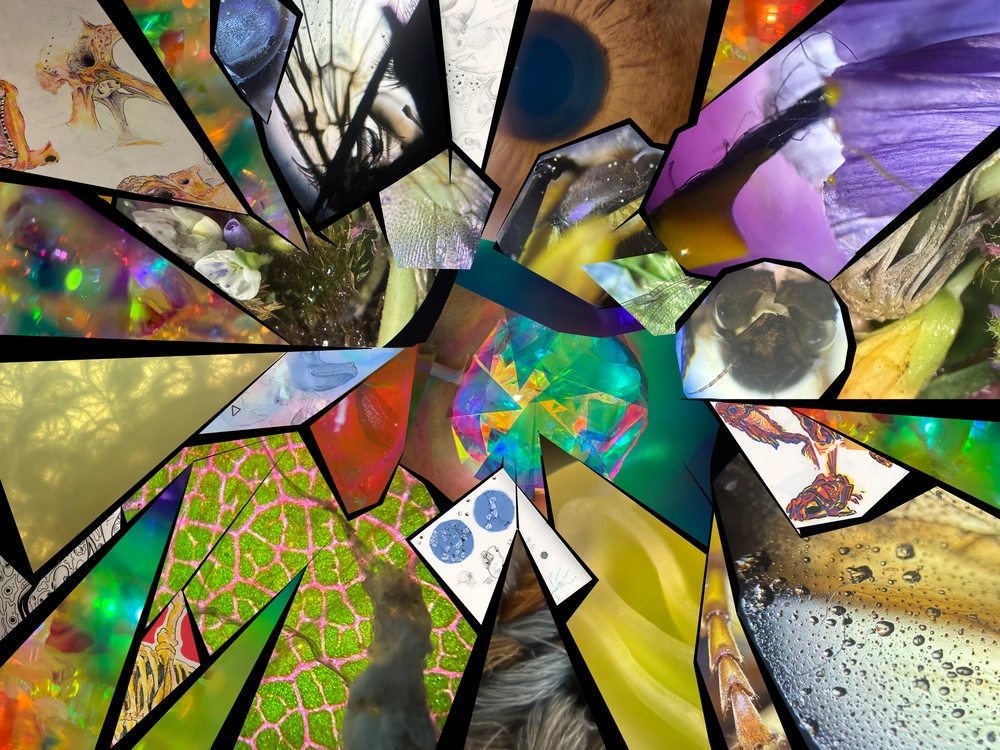
Following a highly successful inaugural year, CCRI's Science Art Mentorship Program returns with Prismosities, a public exhibition showcasing original, science-inspired student artwork. Thirteen students from both biology and art studio backgrounds spent their summer blending scientific research with studio art, and their culminating projects will be on display from September 1 through September 30 at the Flanagan Campus Art Gallery.
The college will also host a free public reception for the artists and the community on Friday, September 11, from 4 to 7 p.m.
“It is amazing to see the students support each other throughout the program,” said Dan O’Neill, Chair of the CCRI Department of Art, Art History & Design. “When the students get excited about each other’s creative projects, their sharing of feedback and ideas becomes a powerful upward spiral that lifts students to new heights. I see students surprise and impress themselves with what they can achieve.”
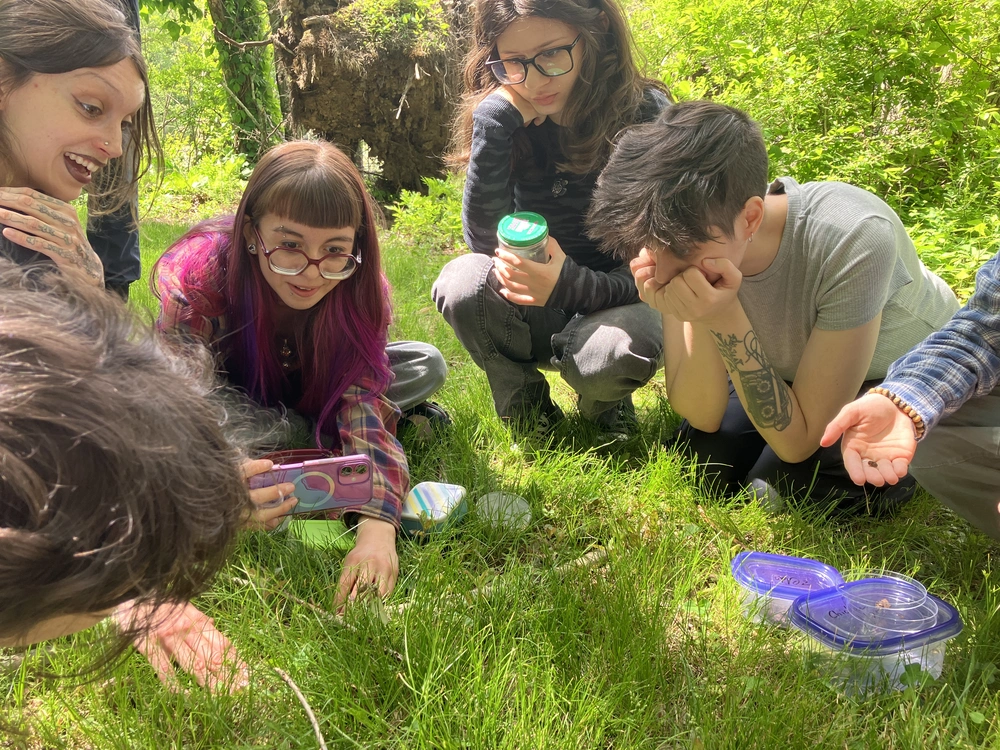
Directed by O’Neill, the mentorship program has grown significantly in its second year. With increased funding from the U.S. National Science Foundation’s EPSCoR initiative, the program expanded its scope to give students a deeply hands-on, professional-level research experience.
The hallmark of this year’s expanded programming was an in-depth partnership with two distinct biology research labs at Brown University: the Wessel Lab, which focuses on reproduction and embryological development using Echinoderms, and the Tingle Lab, which studies the evolution of snake locomotion and morphology.
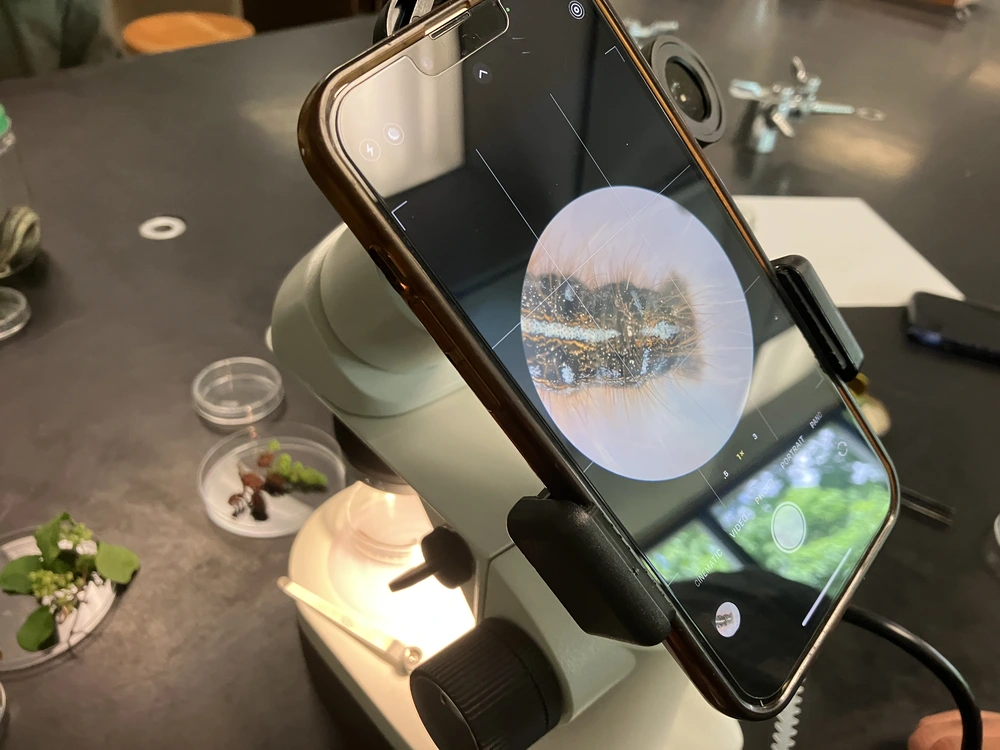
In these labs, CCRI students worked side-by-side with leading scientists, graduate students, and lab staff. The students operated advanced microscopes and imaging technology, learning firsthand how capturing, manipulating, and displaying images is essential to modern scientific inquiry.
This immersive, on-site laboratory experience was supplemented by a series of workshops designed to push the students' creative and technical boundaries. In CCRI's Mac Lab, students explored digital media -- including animation, video editing, and sound design -- to discover ways to experiment with the visual data captured in scientific research. They also attended a character design workshop led by Rhode Island College Biology Assistant Professor Dr. Jason Ramsay, where they applied real-world biological constraints to create scientifically believable fictional creatures. Additionally, students gained insights from guest practitioners, enjoying a presentation by science educator and inventor Alex Hornstein and a visit to the Big Nazo Lab for a puppetry workshop with Erminio Pinque.
Drawing inspiration from these extensive field experiences, the students applied a design process to craft their final projects for Prismosities. The resulting exhibition features a diverse array of mediums, including puppetry, textiles, 3D models, microscope photography, interactive pieces, and prototypes of natural history displays.
“This program is a great opportunity for anyone who has interest in science and art, who wants to learn how to use scientific tools, and how to express yourself by mixing science and art,” said student Elwood Crosby. “Being around the group that we have has really changed my perspective on what scientific art can look like.”
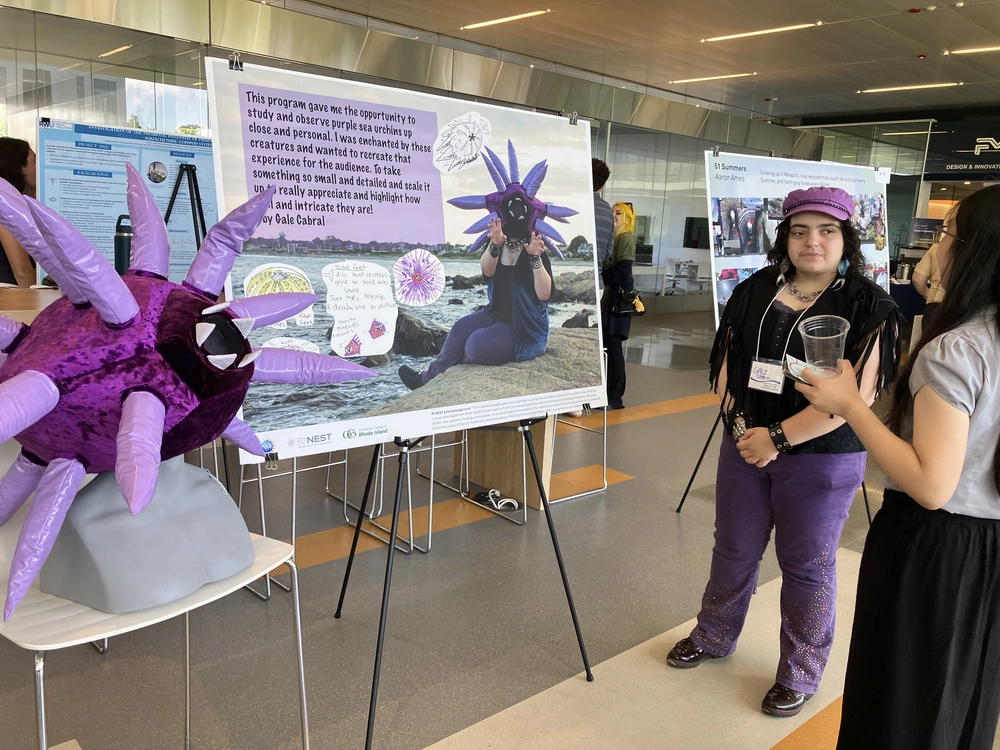
The students have already begun sharing their unique perspectives with the broader scientific community. In July, eight of the program's students presented posters of their art and design work at URI’s Summer Undergraduate Research Symposium, marking a significant increase in representation from the program's first year.
The second year of the Science Art Mentorship Program demonstrates the impact of interdisciplinary collaboration, showing that artists and scientists share a powerful common drive for discovery.
Have something to share?
Submit a StoryHave a story about a student, colleague, or yourself?! Share your story with CCRI and engage with the community.