Contact Information
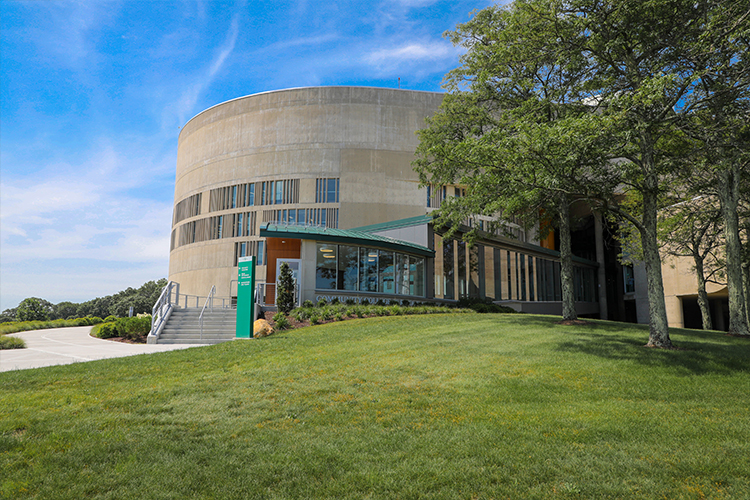
Main office:Knight Campus
3rd Floor, main building
Tel: 401-825-2181
Meet the department:
The CCRI Department of Marketing and Communications is the hub for all internal and external college communications. If you have news you want people to know about, let us know!
Search archives
Avid Film Composer co-inventor is guest professor in Warwick this fall
Aug. 10, 2012
Michael Phillips, co-inventor of the video editing software Avid Film Composer, will teach COMM 2300, Video and Media Editing, at CCRI this fall.If you have seen a major motion picture in the last few years then you are, in a way, familiar with the work of Michael Phillips.
He is the co-inventor of Avid Film Composer, a software suite used for video editing that has become a Hollywood standard. It has been used on films such as “Transformers,” “Avatar,” “Inception,” and “Black Swan,” among many others. Phillips himself has many film credits as a post-production and digital editing consultant and won an Academy Award for technical achievement in 1995 for his work with Avid from the Academy of Motion Picture Arts and Sciences.
This fall, Phillips will bring his considerable expertise to a special guest professorship at the Community College of Rhode Island. His course, COMM 2300, Video and Media Editing, will familiarize students with the history and practices of video editing with a strong focus on storytelling. Students will learn how to use video editing software, study classic and contemporary films to learn how editing enhances storytelling and work with local Rhode Island director Michael Corrente on a mock film project to learn how to collaborate creatively.
“The class will be a balance of creativity and technology to learn how to be an asset to a production,” Phillips said.
Besides feature films, the course also will cover commercials and editorial films, representing the wide range of work available in the media industry.
“There are jobs everywhere,” Phillips said. “Not everybody gets to be a director but there are a lot of jobs with some creativity in them.”
Phillips suggested that students interested in a film career get into the business however they can and find their niche from within as they build experience and networking contacts. He hopes to teach his students how to collaborate in a professional environment – a useful job skill in any field.
Phillips will base his curriculum on more than 20 years of experience working in the business. He first studied film at the University of Montana, inspired by his brother, Howard, who is also in the midst of an extensive film career.
Phillips moved to Boston in 1986 and worked as a freelancer before being hired by the Avid Co. in 1990. The timing was fortuitous, as Avid was about to solve a major technical problem and revolutionize the film industry.
The problem was this: Motion picture cameras using celluloid film operate at 24 frames per second and, in order to edit that footage, technicians had to convert to video, which operates at 30 frames per second. Conversion was a tedious process and it was tough for an editor to know, when making quick cuts, how the final product would look after conversion back to film.
An alternative was the even more time-consuming process of physically cutting and splicing reels of film, which required precise planning and organization and discouraged trying spontaneous ideas. This practice is the source of the idiom that unused parts of a project are “left on the cutting room floor.”
Avid software allowed editors to work at 24 frames per second – the native speed of theatrical motion pictures – letting them see exactly how a finished product would look on a big screen. It also allowed for nonlinear editing: the ability, now taken for granted, to skip to any point in the footage without having to wind tape or film all the way there sequentially.
“It sounds easy enough but, back then, it was revolutionary,” Phillips said.
Avid dramatically reduced editing time and greatly enhanced the collaboration between editors and directors. For the first time it was feasible for a director to stay in the editing room while changes were being made rather than give orders and return days later when film reels had been painstakingly cut or videotape tediously wound, rewound and re-edited.
The Avid developers won an Academy Award plaque in 1995 and an Oscar statuette for continued development in 1998. About 80 percent of the film industry has adopted their product.
Phillips continues to stay active as a film editor, taking on many projects as a freelancer. He and his brother opened a firm called The Edit House in 1993 that gave independent filmmakers access to the expensive Avid software. They offered their services to the production of Neil LaBute’s “In the Company of Men” and worked with Wes Anderson on his first short film “Bottle Rocket,” which later became feature length.
Phillips left Avid in 2011 and continues to teach and work on film projects. As chief technology officer for Cineworks, he recently finished post-production work in New Orleans for the upcoming crime drama “Iceman,” starring Michael Shannon, Ray Liotta, Winona Ryder and James Franco.
Phillips’ involvement with CCRI began last year when he was invited to serve on the College Advisory Board and help update the school’s media curriculum,which led to an invitation from Assistant Computer Studies Professor Sandra Luzzi Sneesby to help put that curriculum into practice in the classroom.
COMM 2300 is open to students who have completed either COMM 1000, 2100 or 2200. It will meet from 9 a.m. to 1 p.m. on Mondays at the Knight Campus in Warwick during the fall semester.
This page is maintained by the Department of Marketing and Communications. We welcome feedback on your experience using the site - please e-mail with your comments or concerns.